

The pressure had been mounting. Three consecutive defeats across all competitions had cast doubt over Liverpool’s season and raised questions about Arne Slot’s ability to navigate his first truly difficult period at Anfield. But on a crisp Sunday afternoon at the London Stadium, the Reds delivered exactly the response their manager, their supporters, and indeed the entire football world had been waiting for. A composed 2-0 victory over West Ham United, secured through second-half goals from Alexander Isak and Cody Gakpo, brought an end to Liverpool’s losing streak and offered a glimpse of the resilience that could yet define their campaign.
Speaking to the media in the bowels of the London Stadium after the final whistle, Slot cut a relieved but measured figure. This was a manager who understood the significance of the result while remaining acutely aware of the challenges that still lie ahead. His post-match press conference provided fascinating insights into his tactical thinking, his squad management philosophy, and the emotional intelligence that has already endeared him to Liverpool’s passionate fanbase.
The Relief of the Second Goal
When asked about his reaction to Gakpo’s stoppage-time clincher, Slot’s response revealed the anxiety that accompanies even comfortable-looking victories in football’s unforgiving modern landscape. Rather than pure celebration, his immediate thought turned to potential controversy, as he suspected a possible handball in the buildup to the goal.
The Dutchman admitted he wasn’t surprised when the VAR review took longer than usual, confessing he had shared his concerns with his coaching staff in real-time. Only when the referee pointed to the center circle, confirming the goal would stand, did genuine relief wash over him. It’s a moment that encapsulates the fine margins operating at the highest level of football, where even a two-goal cushion cannot be celebrated until technology has had its say.
This candid admission also speaks to Slot’s understanding of how quickly momentum can shift in football. Having watched his team dominate for large spells without finding that crucial second goal, he knew that any controversy could reignite West Ham’s hopes and potentially undermine all of Liverpool’s good work. The confirmation that the goal was legitimate allowed him, his players, and the traveling supporters to finally exhale.
Analyzing the Team’s Response
When reflecting on his team’s overall performance, Slot demonstrated the analytical mindset that has characterized his approach since arriving at Liverpool. Rather than simply celebrating the victory, he carefully dissected what had changed from recent disappointing results and what patterns had persisted.
The manager identified a crucial turning point in Liverpool’s recent struggles: the tendency to concede from the opponent’s first meaningful chance. This pattern had plagued them in losses against Nottingham Forest and PSV Eindhoven, where defensive lapses early in matches had fundamentally altered the complexion of the games. Against West Ham, Liverpool finally broke this damaging cycle, maintaining their clean sheet until the visitors’ only genuine opportunity arrived after ninety minutes had elapsed.
Slot’s emphasis on this defensive solidity reveals his understanding that confidence in football is often built from the back. When a team knows they won’t concede from every attack they face, it creates the psychological space for attackers to miss chances without catastrophic consequences. Liverpool’s forwards still failed to convert several early opportunities against West Ham, but crucially, these misses didn’t prove costly because the defense held firm.
The manager also highlighted the importance of set-piece situations, noting with satisfaction that Liverpool not only avoided conceding from a dead-ball situation but actually scored from one themselves, with Isak’s opener originating from a long throw. Given the number of set-piece goals Liverpool had conceded during their losing streak, this represented a significant tactical improvement and vindication of the work done on the training ground.
The Power of Unwavering Support
Perhaps the most emotionally resonant moment of Slot’s press conference came when he addressed the incredible support provided by Liverpool’s traveling fans. His words offered a window into what it means to manage one of football’s most storied institutions, particularly during periods of adversity.
Slot spoke with genuine admiration about the away end at the London Stadium, which remained full and vocal from the opening whistle to the final minute. The supporters sang for their team when the score was goalless and uncertainty hung in the air, not just after Isak’s breakthrough gave them something to celebrate. This unwavering backing, the manager noted, reflected something fundamental about Liverpool Football Club’s identity.
The Dutch tactician drew a distinction between supporting success, which he described as easy, and supporting a team during difficult moments, which reveals true loyalty. The fact that Liverpool’s fans chose to back not just the players but him personally, chanting his name despite the recent run of defeats, clearly moved Slot. He recognized this as a defining characteristic of the club’s culture, an intangible asset that separates Liverpool from many other institutions.
This mutual appreciation between manager and supporters could prove crucial as the season progresses. Slot now understands that Liverpool’s fanbase will grant him patience and trust if they believe he represents their values and is working tirelessly to improve the team. For supporters, hearing their manager acknowledge and value their contribution reinforces the bond between all stakeholders in the club.
Isak’s Breakthrough Moment
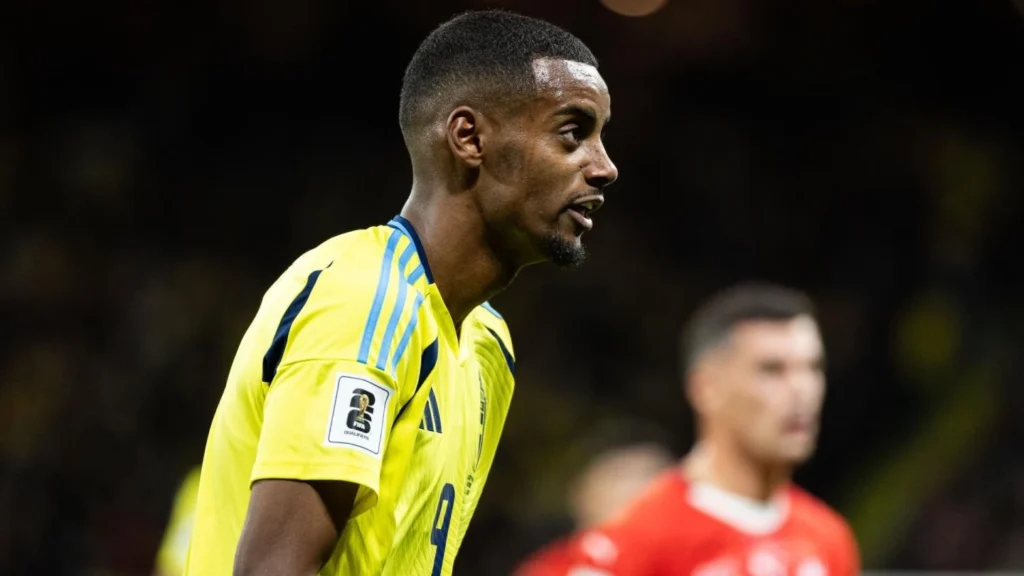
Alexander Isak’s opening goal carried particular significance, marking his first Premier League strike for Liverpool. Slot’s analysis of this milestone revealed his awareness of the unique pressures facing a high-profile striker attempting to establish himself at a new club.
The manager pointed out an often-overlooked reality: Isak hadn’t actually accumulated that many minutes in a Liverpool shirt despite appearing in several matches. Injuries, tactical rotations, and the need to manage his fitness meant the Swedish international had been deployed sparingly, making it statistically less surprising that his first league goal took time to arrive.
Slot also revealed the delicate balancing act he had faced during the West Ham match itself. Performance staff had been monitoring Isak’s condition closely, aware that he didn’t have much more than ten minutes left in him when he finally found the net. The timing proved perfect, allowing the striker to depart with confidence intact and Liverpool with a crucial lead secured.
This goal could represent a watershed moment for Isak’s Liverpool career. First goals often unlock something psychological in strikers, removing the burden of expectation and allowing them to play with greater freedom. Slot clearly recognizes this, understanding that Isak’s development could be critical to Liverpool’s attacking potency in the months ahead.
Wirtz Returns to His Best
Florian Wirtz’s performance warranted particular praise from Slot, who seized the opportunity to make a broader point about individual versus collective assessment. Throughout the losing streak, the manager had consistently defended struggling players by emphasizing team performance over individual contributions. Now, with Wirtz delivering a standout display, he applied the same principle in reverse, crediting the German’s excellence while noting that the improved team performance had created the platform for individual brilliance.
Slot’s tactical explanation of Wirtz’s role provided insight into Liverpool’s approach. The manager had asked his team to create an extra midfielder in possession, and Wirtz proved instrumental in achieving this objective. His movement, one-touch passing, and ability to receive the ball in tight spaces helped Liverpool dominate midfield and progress play into dangerous areas.
The decision to keep Wirtz on the pitch for the full match despite concerns about his fitness revealed Slot’s pragmatism. Performance staff had repeatedly urged the manager to substitute the German, knowing he had completed only one training session following his two-week injury absence. But Slot made a calculated decision that some situations demand exceptions to normal protocols, judging that Wirtz’s influence on the game justified the risk of potential fatigue or re-injury.
This willingness to trust his instincts over data-driven recommendations demonstrates Slot’s confidence in his own judgment while also highlighting his understanding that football cannot be reduced purely to sports science metrics. Sometimes, keeping your best players on the pitch, even when they’re tired, represents the correct decision.
Kerkez’s Promising Display and Physical Demands
Milos Kerkez’s performance and subsequent substitution due to cramp allowed Slot to address broader themes about adaptation to English football and the demands of a congested fixture schedule. The young left-back had impressed defensively and created several attacking opportunities before his legs gave out late in the match.
Slot identified two factors contributing to Kerkez’s physical struggles. First, the defender was still adapting to the unique intensity of Premier League football, where the pace rarely relents and physical duels occur with relentless frequency. Second, Kerkez’s playing style, characterized by maximum effort in every action, naturally accelerates fatigue accumulation.
The manager’s analysis reflected his understanding that physical adaptation represents a crucial but often underestimated challenge for players new to England’s top flight. The Championship may be intense, but the Premier League operates at a different level entirely, demanding reserves of stamina and resilience that only develop through experience.
Slot also used Kerkez’s situation to reinforce a point he had made repeatedly: Liverpool’s squad was being stretched to its limits by fixture congestion and limited availability. With only fourteen to fifteen outfield players fit for selection across four matches in ten days, physical management had become paramount.
The Salah Question
Perhaps inevitably, Slot faced questions about Mohamed Salah’s omission from the starting lineup. The Egyptian forward, one of Liverpool’s most decorated players and their most consistent goal threat, had been named among the substitutes, prompting speculation and debate.
The manager’s response reflected a mixture of patience and mild frustration. He noted that he fields similar questions whenever any of Liverpool’s star players is rotated, whether it’s Wirtz, Isak, Hugo Ekitike, or Salah himself. This observation highlighted the unique pressure associated with managing multiple world-class talents, where every selection decision becomes subject to intense scrutiny.
Slot emphasized that Salah’s omission was purely tactical and related to squad management across a punishing fixture schedule. With four matches in ten days and limited squad depth, rotation became necessary rather than optional. The manager’s decision to start without Salah was based on his analysis of West Ham’s tactical setup, particularly their use of an advanced full-back and an inside winger, which he believed Liverpool’s selected lineup could exploit more effectively.
Crucially, Slot took the opportunity to reaffirm Salah’s importance to Liverpool’s present and future. The Egyptian has enjoyed an extraordinary career at Anfield, and the manager made clear this success story would continue. This public backing served dual purposes: reassuring Salah that he remains central to Liverpool’s plans while also managing media narratives that might suggest otherwise.
Looking Forward
As Slot departed the London Stadium press room, he left behind the impression of a manager who had learned from adversity and emerged stronger. The victory over West Ham wasn’t perfect, but it demonstrated qualities that had been absent during the losing streak: defensive resilience, tactical discipline, and the ability to capitalize on key moments.
The challenge now is to build on this foundation. One victory doesn’t erase three consecutive defeats, nor does it guarantee smooth sailing ahead. Liverpool’s fixture list remains demanding, their squad depth continues to be tested, and the margin for error in both domestic and European competitions remains razor-thin.
But Slot has shown he possesses the analytical acumen, emotional intelligence, and tactical flexibility to navigate these challenges. His ability to identify specific areas of improvement, his appreciation for Liverpool’s unique culture, and his pragmatic approach to squad management all suggest a manager capable of succeeding at the highest level.
For Liverpool supporters, the West Ham victory offered more than just three points. It provided evidence that their team can respond to adversity, that their manager can adapt when circumstances demand it, and that the bond between club and fans remains as strong as ever. As Slot himself acknowledged, these are the qualities that make Liverpool special—and they may yet prove decisive in determining how this season unfolds.
🔴Find the Latest News on Player Ratings | Transfers | Prematch | Postmatch
Thank you for your continued support, and let’s cheer Liverpool on to success in the upcoming match. Your thoughts are always welcome in the comments section. For further insights, you may explore the official Liverpool FC website by clicking here.
YNWA (You’ll Never Walk Alone)!
The Liverpool FC Times Team
LiverpoolFCTimes.com