
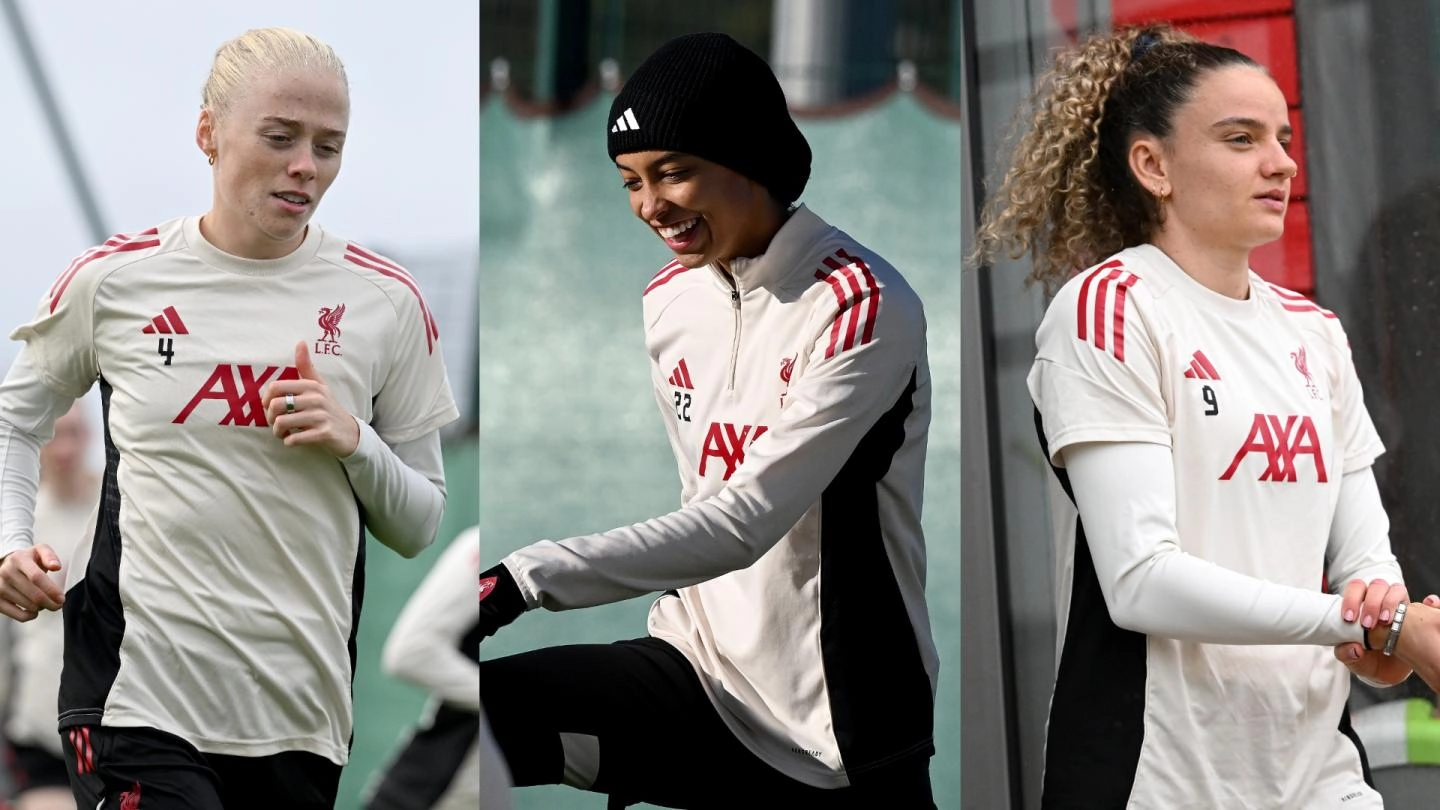
Gareth Taylor faces one of his most challenging team selection puzzles of the season as Liverpool FC Women prepare to host defending champions Chelsea in Sunday’s Subway Women’s League Cup quarter-final. The head coach’s pre-match fitness update revealed a squad stretched to its limits by injuries, suspension, and race-against-time rehabilitation efforts, creating a perfect storm of unavailability for one of the most significant fixtures on the calendar.
The Captain’s Uncertain Status
Grace Fisk’s injury situation epitomizes the frustrating nature of Taylor’s selection challenges. The captain’s progress toward fitness has been steady but ultimately insufficient to guarantee her availability for Sunday’s crucial encounter. Taylor’s assessment that she is “closer, but still not back with the main group” suggests Fisk has made significant strides in her rehabilitation without yet achieving the full fitness required for competitive action.
The characterization of her participation as having “an outside chance for the weekend” that “looks very slight” reveals Taylor’s realistic assessment of the situation. As manager, he must balance the desire to have his captain available for such an important fixture against the medical reality of her condition and the risk of premature return leading to setback or more serious injury. The cautious language suggests Taylor and his medical staff have determined that rushing Fisk back would be inadvisable regardless of the match’s significance.
Fisk’s absence removes Liverpool’s designated leader and one of their most experienced defenders at precisely the moment when both qualities would be most valuable. Facing Chelsea, the dominant force in English women’s football, requires organizational excellence, communication, and composure under pressure. These are precisely the attributes captains provide, and Fisk’s likely unavailability forces Taylor to rely on alternative leadership while potentially reshuffling his defensive unit.
The situation has provided Jenna Clark with the opportunity to captain the side, a responsibility she has embraced with pride. However, the ideal scenario would involve having both players available, with Fisk’s experience complementing Clark’s emerging leadership qualities rather than Clark shouldering the burden alone during one of the season’s most demanding fixtures.
Suspension Compounds Defensive Challenges
Gemma Bonner’s absence through suspension adds another layer of complexity to Taylor’s defensive planning. Red cards carry consequences that extend beyond the match in which they occur, and Bonner’s dismissal during the previous fixture now removes another experienced defender from availability. The timing could hardly be worse, coinciding with Fisk’s injury to deprive Liverpool of two senior defensive options simultaneously.
Suspension differs from injury in its certainty and its implications. While injured players might recover unexpectedly or be risked in crucial matches, suspended players are definitively unavailable regardless of their fitness or the manager’s willingness to take chances. This removes any possibility of late changes to team selection based on final training sessions or player feedback, forcing Taylor to plan definitively without Bonner’s involvement.
The combination of Fisk’s injury and Bonner’s suspension creates a defensive crisis that extends beyond simply missing two players. It removes experience, leadership, and organizational capability from Liverpool’s backline precisely when they face Chelsea’s formidable attacking arsenal. Taylor must now construct a defensive unit from available options while maintaining sufficient structure and communication to withstand Chelsea’s offensive pressure.
Race Against Time Injuries

Hannah Silcock and Leanne Kiernan represent the most complex elements of Taylor’s injury situation, both carrying “slight chance” designations that create uncertainty about team selection right up until kickoff. The nature of their injuries, while serious enough to cast doubt on their availability, offers realistic hope that rapid improvement might enable late inclusion in the squad or even starting lineup.
Kiernan’s foot injury, characterized by severe bone bruising causing uncomfortable swelling, demonstrates how seemingly straightforward injuries can become complicated by their specific nature and location. Taylor’s explanation that she “had it before she made a couple of appearances for us more recently and then has caught it again in training” reveals a recurring problem that has resisted full resolution despite previous attempts to manage it.
The image of Kiernan training in a protective boot creates visual impression of serious injury that might seem inconsistent with potential Sunday availability. However, Taylor’s explanation that “when you see someone in a boot they’re potentially out of the game on Sunday” but “we’re hoping if it can settle quickly enough we might get her tomorrow” demonstrates the gap between external appearance and actual recovery timeline. The boot serves protective rather than immobilizing function, and rapid reduction in swelling could theoretically enable her participation.
The manager’s suggestion that Liverpool might “even get her back on Sunday morning” illustrates the race-against-time nature of her situation. Final decisions about her involvement may not be possible until match day itself, when medical staff can assess overnight progress and determine whether participation carries acceptable risk. This uncertainty complicates Taylor’s tactical planning, as he must prepare alternative approaches depending on whether Kiernan becomes available.
Silcock’s situation similarly combines severity with possibility of rapid improvement. The dead leg she sustained in the West Ham fixture, from a challenge that forced her immediate withdrawal despite Liverpool already being reduced to ten players, has proven remarkably resistant to healing. Taylor’s admission that “we didn’t really want to” remove her from that match but “ended up having to do it” underscores the severity of the impact and the challenge it has posed to medical staff.
Dead leg injuries, while common in contact sports, vary enormously in their recovery timelines depending on the severity of muscle damage and associated bleeding. Silcock’s injury “just really not settling down at all” despite the passage of time since the West Ham match suggests either significant initial trauma or complications in the healing process. Like Kiernan, her participation represents “a slight chance” that depends on rapid improvement in the final days before the match.
The Longer-Term Absentees
Taylor’s reference to “the longer termers like Marie Höbinger, Sophie Roman Haug and Sam Kerr” provides context about the broader injury situation affecting his squad. These players are definitively unavailable for Sunday’s quarter-final, with their return timelines extending well beyond the immediate fixture. Their absence reduces squad depth and limits tactical options throughout this period, forcing Taylor to rely heavily on available players while managing their workload carefully.
The manager’s specific update on Sam Kerr carries particularly concerning news. His assessment that she faces “the best part of three to four months” out represents a significant blow to Liverpool’s attacking options. Kerr’s extended absence, which Taylor characterizes as “difficult,” removes an important player for a substantial portion of the season. The confirmation that “she’ll not be back after the break” eliminates any hope of her involvement in upcoming crucial fixtures.
Marie Höbinger and Sophie Roman Haug similarly remain sidelined, their continued unavailability referenced but not elaborated upon in Taylor’s update. The implication that their situations are well-known to reporters and supporters suggests these are injuries that have been discussed previously and continue along expected recovery trajectories. Their absence contributes to the cumulative effect of multiple unavailable players rather than representing shocking new developments.
Goalkeeper Complications
Rafaela Borgraffe’s continued unavailability adds another dimension to Taylor’s selection challenges. While goalkeeper depth typically receives less attention than outfield positions, having a goalkeeper unavailable through injury removes an option that provides insurance against poor form or injury to the first-choice goalkeeper. The brevity of Taylor’s reference to Borgraffe’s situation suggests either that details have been discussed previously or that the injury’s nature or timeline doesn’t warrant extended explanation.
Hope Beyond the Winter Break
Taylor’s forward-looking comments about potential returns following the winter break provide some optimism amid the current crisis. His expectation that Risa Shimizu “should be back with us after the break” because “she’s looking quite good in terms of her recovery” offers hope that reinforcements will arrive once the brief winter pause concludes. Shimizu’s return would provide additional options that could ease the burden on players who have shouldered heavy workloads during this injury-plagued period.
The manager’s hope that “Hannah and Fisky will be back at that point and available for selection” following the break suggests both players are progressing toward full fitness even if they cannot contribute immediately. This timeline provides a target for their rehabilitation work and offers some certainty about when Taylor can expect his squad to return toward full strength.
However, Sam Kerr’s extended timeline casts a shadow over these more optimistic projections. Her three-to-four-month absence means Liverpool will need to manage without her contributions for a significant portion of the season, requiring tactical adjustments and increased responsibility from other attacking players.
The Immediate Challenge
As Taylor contemplates his team selection for Sunday’s quarter-final, he must balance numerous competing considerations. The match’s significance demands fielding the strongest possible team, yet the injury situation severely limits available options. Players carrying slight injury doubts might normally be rested for safety, but the stakes of knockout competition and the shortage of alternatives may force calculated risks.
The phrase “we’re going to be pretty light again, particularly more so from the sidelines” captures the reality that even players who start Sunday’s match may be doing so despite not being fully fit, with the bench offering limited cover should further injuries occur or tactical changes prove necessary. This vulnerability creates additional pressure on players who do feature to avoid injury and maintain performance levels throughout the ninety minutes.
Taylor’s challenge extends beyond simply naming eleven players. He must construct a tactical approach that maximizes available players’ strengths while minimizing exposure of their limitations or injury vulnerabilities. He must prepare contingency plans should late-deciding injury situations break unfavorably. And he must maintain squad morale and belief despite the obvious disadvantages Liverpool face in personnel availability compared to Chelsea’s relative luxury of selection.
The coming hours will determine whether Kiernan, Silcock, or even Fisk defy expectations to feature against Chelsea. Regardless of these final determinations, Taylor faces the quarter-final knowing his squad is stretched thinner than ideal for such a crucial fixture, testing his tactical ingenuity and his players’ collective resolve against the defending champions.
Find the Latest News on Player Ratings | Transfers | Prematch | Postmatch
Thank you for your continued support, and let’s cheer Liverpool on to success in the upcoming match. Your thoughts are always welcome in the comments section. For further insights, you may explore the official Liverpool FC website by clicking here.
YNWA (You’ll Never Walk Alone)!
The Liverpool FC Times Team
LiverpoolFCTimes.com