
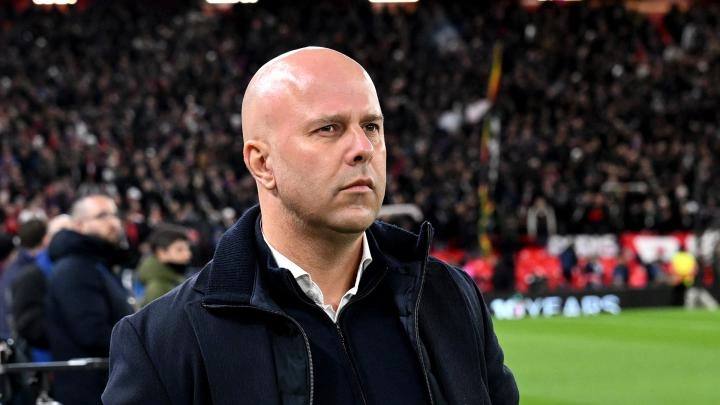
Arne Slot cut a figure of mounting frustration as he addressed the media following Liverpool’s dramatic 3-3 draw at Elland Road on Saturday evening. The Liverpool manager’s post-match press conference revealed a coach torn between satisfaction with his team’s performance and exasperation at their inability to convert dominance into victories—a pattern that has defined their recent struggles.
The Familiar Frustration
Slot’s opening assessment captured the essence of Liverpool’s current predicament. His observation that there were “so many positives to take from this game” except for the result has become an increasingly common refrain this season. This disconnect between performance and outcomes represents perhaps the most concerning aspect of Liverpool’s campaign—not that they are playing poorly, but that they consistently fail to secure points that their play deserves.
The manner in which Liverpool surrendered their advantage illustrated the multifaceted nature of their difficulties. Leading 2-0 early in the second half through Hugo Ekitike‘s quick-fire double, the Reds appeared in complete control. Yet within fifteen minutes, they found themselves level at 2-2, victim to a VAR-awarded penalty and Leeds’ first genuine attacking opportunity of the match.
Slot’s frustration with the penalty decision was palpable, though measured. His suggestion that “the ball is already out, there was contact, so he gave a penalty” carried an undertone of resignation—the sense that Liverpool are on the wrong end of marginal decisions with concerning regularity. His pointed reference to VAR consistency, noting that similar incidents earlier in the season did not prompt intervention, revealed simmering discontent with officiating standards.
The Mentality Question
When confronted with suggestions that his squad might be “mentally weak” after conceding goals, Slot offered a robust defense of his players’ character. He pointed to their ability to respond immediately after Leeds’ equalizer, regaining the lead through Dominik Szoboszlai‘s 80th-minute strike as evidence of mental resilience rather than fragility.
The manager’s description of Liverpool’s third goal showcased the quality within his squad—Alexis Mac Allister’s intelligent dummy creating space, Szoboszlai arriving in precisely the position Slot had instructed, and executing with clinical precision. This goal represented everything Slot wants from his team: tactical discipline, individual quality, and collective understanding combining to produce moments of decisive action.
However, the manager’s acknowledgment that “we have to do a lot to score a goal” while conceding from minimal opportunities highlighted the cruel efficiency of Liverpool’s current struggles. Football’s fundamental unfairness—that attacking excellence requires numerous components to align perfectly while defensive errors are immediately punished—has rarely been illustrated more clearly than in Liverpool’s recent matches.
The Konate Conundrum
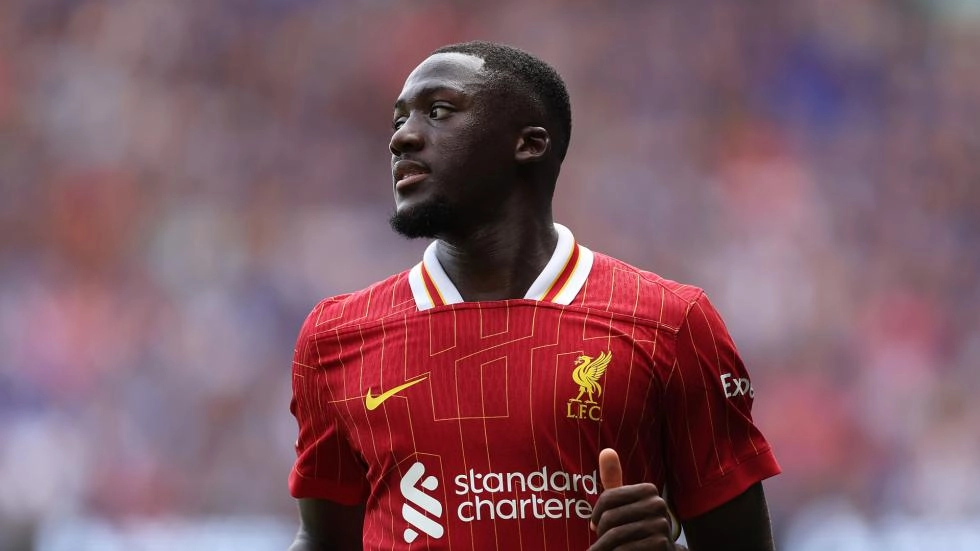
Ibrahima Konate‘s situation exemplifies the fine margins that separate success from failure in elite football. Slot’s use of the English expression “too much on the crime scene” to describe the French defender’s recent fortunes captured both sympathy and concern. The manager emphasized that Konate performs many aspects of his role well, yet finds himself implicated in goals conceded with troubling frequency.
The penalty incident that allowed Leeds back into the match stemmed from Konate’s committed attempt to block a cross—exactly the type of defensive action coaches want to see. That such effort resulted in a penalty decision, while similar incidents elsewhere went unpunished, intensified Slot’s frustration with officiating inconsistency. His call for equal application of VAR standards across different matches revealed deeper concerns about the arbitrary nature of crucial decisions.
The Set-Piece Crisis
Perhaps no single issue encapsulates Liverpool’s struggles more starkly than their set-piece record. Slot’s statistical analysis painted an alarming picture: Liverpool have conceded ten goals from set-pieces in the Premier League while scoring just once—a Szoboszlai free-kick against Arsenal, with possibly one other from a second-phase West Ham throw-in.
This disparity makes Liverpool’s current league position almost miraculous. As Slot noted, “there’s no team in the world that can be in a higher league position than we are if you concede 10 set-pieces and have not scored in the Premier League once.” This stark imbalance between defensive vulnerability and attacking impotence at set-pieces should, mathematically, have relegated Liverpool to mid-table mediocrity.
The manager’s bewilderment at this situation was genuine. He pointed out that the defensive setup remains largely unchanged from last season, when Liverpool rarely conceded from set-pieces during the first half of the campaign. Many of the same players occupy the crucial defensive positions, yet the outcomes have deteriorated dramatically.
Slot’s reluctance to attribute this decline to bad luck—”if I tell you now it’s bad luck, then you probably say that’s a bit too much after 15 games”—suggested he recognizes deeper issues at play. Whether tactical, psychological, or simply a statistical aberration that will eventually regress to the mean remains unclear, but the pattern has persisted long enough to demand serious concern.
Technical Execution and Squad Depth
The manager’s discussion of Joe Gomez‘s late opportunity revealed another dimension of Liverpool’s struggles. When a clear chance fell to Gomez in stoppage time, his first touch as a center-back playing full-back position wasn’t clinical enough to capitalize. Slot’s observation that a natural attacker—Isak, Ekitike, or Szoboszlai—would likely have converted this chance highlighted how Liverpool’s injuries and squad rotation have forced players into unfamiliar roles.
This incident illustrated a broader truth: Liverpool are creating chances but not always with their most natural finishers in optimal positions. The accumulation of such marginal losses in efficiency—a center-back rather than a striker receiving a golden opportunity, a defensive action resulting in a penalty, a set-piece leading directly to a goal—has transformed what should be comfortable victories into agonizing draws.
The Stoppage Time Controversy
Nine minutes of additional time provided Leeds the platform for their dramatic equalizer, a decision that clearly rankled Slot. However, the manager demonstrated political awareness in declining to criticize officiating too explicitly: “Everything I say about that is not the right thing to talk about if you’ve been 2-0 up, 3-2 up and it goes to 3-3.”
This restraint reflected Slot’s understanding that managers who surrender commanding leads forfeit some moral authority to complain about officiating decisions. Yet his tone suggested deep frustration with the extended opportunity Leeds received to salvage a point from a match they had largely been outplayed in.
Reading the Room
Slot’s assessment of the dressing room mood—”really hard”—required no elaboration. His immediate pivot to considering how fans and everyone associated with Liverpool feels demonstrated empathy and understanding of the broader emotional impact. Football clubs are communities of shared experience, and Liverpool’s community is currently experiencing collective anguish.
The manager’s emphasis on recognizing his players’ effort—”these players are fighting really, really, really hard and combine that with good football”—served dual purposes. It defended his squad against suggestions of inadequate commitment while also attempting to maintain morale during a difficult period. Slot needs his players to believe their efforts will eventually yield appropriate rewards, even as evidence mounts that current approaches require adjustment.
The Search for Positives
Despite the disappointment, Slot maintained perspective about Liverpool’s overall performance level. His assertion that this would have been considered “a controlled performance, dominant” had Liverpool won reflected genuine belief in the quality of play his team produced. The comparison to Manchester City and Chelsea’s struggles against Leeds’ direct style validated Liverpool’s approach.
Slot’s acknowledgment that opponents have employed this tactic against Liverpool for fourteen consecutive matches revealed his awareness that rivals have identified a viable strategy. Teams are increasingly bypassing Liverpool’s midfield press with direct play, creating the chaotic conditions that have exposed defensive vulnerabilities—particularly at set-pieces.
The manager’s insistence that Liverpool are improving—”individuals are improving, performances are improving”—represented an act of faith as much as assessment. Without corresponding improvement in results, such claims ring hollow to frustrated supporters. Yet Slot’s determination to maintain belief, pointing to Liverpool’s immediate response after conceding and Isak’s header opportunity following the 3-3 scoreline, suggested genuine conviction rather than hollow platitudes.
The Path Forward
Slot’s repeated emphasis on effort, quality, and fighting spirit indicated his belief that Liverpool’s issues are more about fine margins than fundamental flaws. The challenge lies in converting this belief into tangible results before confidence erodes further. The accumulation of disappointments—”so many times after each other”—inevitably affects individuals and teams, regardless of their mental fortitude.
Liverpool find themselves in the peculiar position of playing well enough to win matches while consistently failing to do so. Whether this represents a temporary statistical aberration or symptoms of deeper tactical or psychological issues will determine whether Slot’s patient faith in gradual improvement proves justified or whether more dramatic interventions become necessary. For now, the manager’s anguish mirrors that of Liverpool’s supporters: recognition of quality combined with bewilderment at outcomes.
🔴Find the Latest News on Player Ratings | Transfers | Prematch | Postmatch
Thank you for your continued support, and let’s cheer Liverpool on to success in the upcoming match. Your thoughts are always welcome in the comments section. For further insights, you may explore the official Liverpool FC website by clicking here.
YNWA (You’ll Never Walk Alone)!
The Liverpool FC Times Team
LiverpoolFCTimes.com