
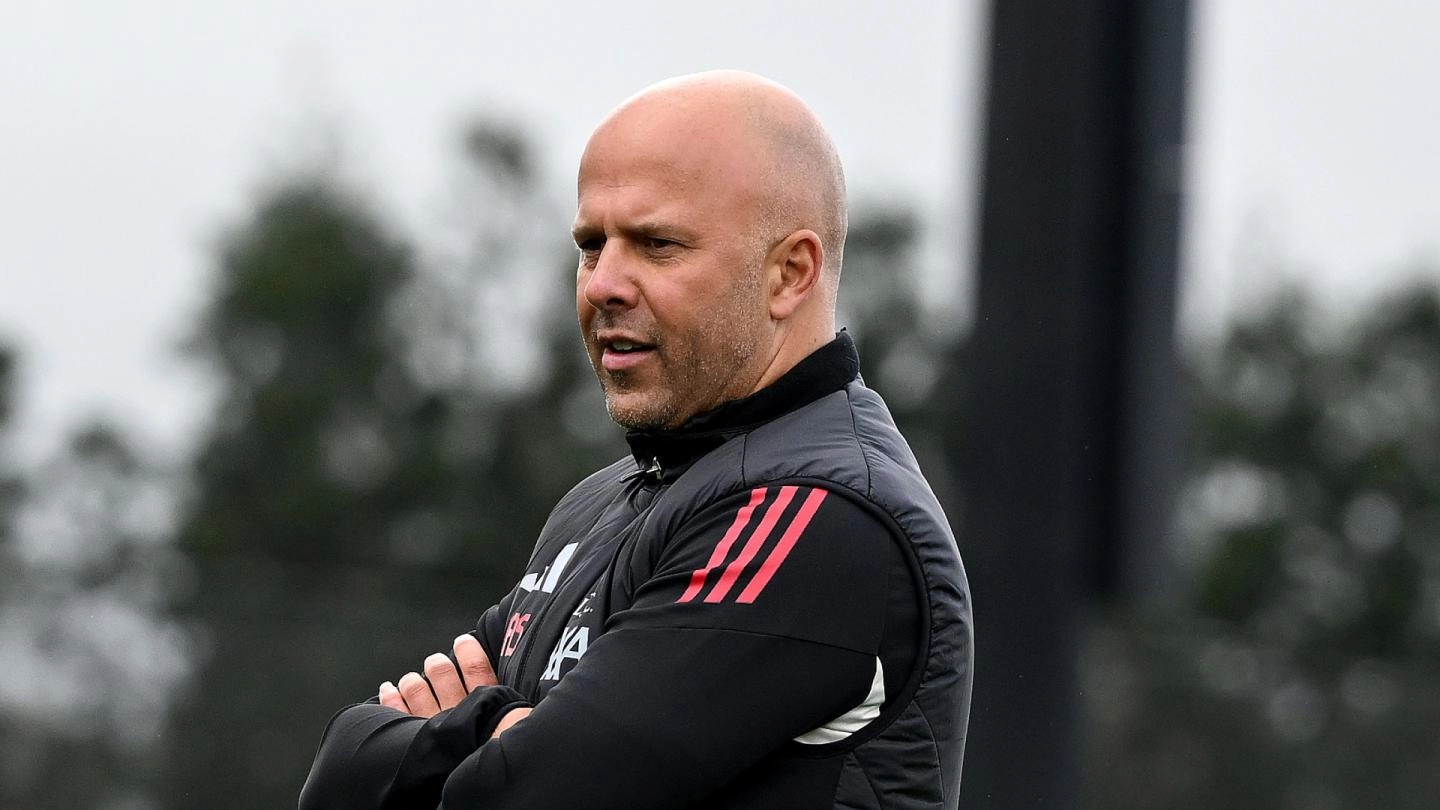
Arne Slot‘s post-match press conference following Liverpool’s 4-1 FA Cup victory over Barnsley revealed a manager torn between satisfaction with progression to the fourth round and frustration with recurring defensive lapses that continue to undermine otherwise dominant performances. The Dutch coach’s detailed analysis exposed tensions between Liverpool’s ability to control matches through possession and their persistent vulnerability to conceding avoidable goals that complicate what should be straightforward victories.
Result Versus Performance
Slot’s opening distinction between result and performance captured his ambivalent assessment of the evening. “A good win. That’s not the performance, that’s the result,” he stated bluntly, establishing from the outset that while Liverpool achieved their objective of advancing in the competition, the manner of that progression left much to be desired. This separation of outcome from execution demonstrated the standards Slot maintains regardless of opposition quality or competition importance.
His emphasis on Liverpool’s “four beautiful goals” attempted to extract positives from the performance, acknowledging quality in the execution of their scoring opportunities. The variety of goals, including long-range strikes from Dominik Szoboszlai and Jeremie Frimpong, plus the combination play that yielded late goals for Florian Wirtz and Hugo Ekitike, showcased Liverpool’s attacking arsenal. Slot’s tactical analysis of how teams unlock low defensive blocks through set-pieces, shots from outside the box, and one-on-one situations revealed his understanding that possession dominance alone proves insufficient against organized opposition.
However, the manager’s reluctance to offer fuller praise for the overall performance suggested deeper concerns about aspects that statistics and scorelines cannot capture. His observation that “it’s every home game the same, when you see a team in red that’s constantly in ball possession” carried undertones of frustration with Liverpool’s inability to convert territorial dominance into the kind of commanding victories their possession statistics suggest they deserve.
The Szoboszlai Error and Recurring Pattern
Slot’s discussion of Szoboszlai’s mistake that allowed Adam Phillips to score Barnsley’s goal revealed particular frustration not just with the specific incident but with a recurring pattern that has plagued Liverpool throughout the season. The manager’s admission that he considered addressing the error at halftime but chose instead to focus on tactical adjustments demonstrated pragmatic prioritization of what would most benefit the team’s second-half performance.
However, his statement that “I have my opinion about that, which I’m definitely going to share with him” indicated that while he deferred the conversation, he had not dismissed its importance. The promise of a private discussion suggested Slot understands that public criticism serves limited purpose compared to direct, detailed feedback delivered away from media scrutiny.
More significantly, Slot’s expansion of the critique beyond Szoboszlai’s individual error to a team-wide issue revealed deeper concerns. “It’s not the first time, now I’m talking generally, that we are 2-0 up, there’s no problems in the game and then we concede a sloppy or easy goal,” he explained, identifying a pattern that has undermined Liverpool’s season. His assessment that “this one stands definitely out, even for us, when it is about conceding an easy and sloppy goal” suggested Szoboszlai’s mistake represented an extreme example of a systemic problem.
The Psychological Impact of Defensive Errors
Slot’s analysis of how conceding from 2-0 up affects match dynamics demonstrated sophisticated understanding of football’s psychological dimensions. His explanation that opponents “close to maybe accepting their loss” at 2-0 down can suddenly rediscover belief after pulling a goal back captured how individual errors ripple through entire match narratives. The shift in mindset he described, from defeated resignation to renewed hope, creates exactly the complications Liverpool have experienced repeatedly this season.
The manager’s observation that “it’s definitely not helpful for us” carried obvious truth while also understating the genuine damage these lapses inflict. Beyond the tactical implications, such errors affect team confidence, supporter morale, and the comfortable management of matches that should be straightforward. His acknowledgment that “even tonight we could see a lot of things being the same as we’ve seen so many times this season” suggested resignation to a pattern he has thus far proven unable to correct despite repeated attempts.
Penalty Appeals and Officiating Consistency
Slot’s discussion of the penalty appeal involving Szoboszlai in the second half revealed measured perspective on officiating that balanced acceptance of decisions with gentle critique of consistency. His observation that there was “no VAR so when he gives it then even if he would have made a mistake, there was not a possibility to correct it” acknowledged the realities of FA Cup matches at this stage not featuring video review.
However, his comparison to incidents in Arsenal’s penalty area during Thursday’s match carried clear implication that he believes Liverpool have been on the wrong end of inconsistent officiating. His statement that “I’ve seen Thursday evening things twice in Arsenal’s box that were more a penalty than this one” made his point without crossing into territory that might invite sanctions from football authorities for criticizing officials.
The broader observation that “this season we’ve conceded penalties, referees have given penalties against us, even after VAR interventions in incidents that were less than the two incidents that happened at Arsenal” articulated frustration with perceived inconsistency while maintaining diplomatic tone. His assertion that he “could live with the outcome at Arsenal and I could live with the outcome today” demonstrated acceptance even while making clear he noticed the patterns.
Ngumoha’s Development and Physical Demands
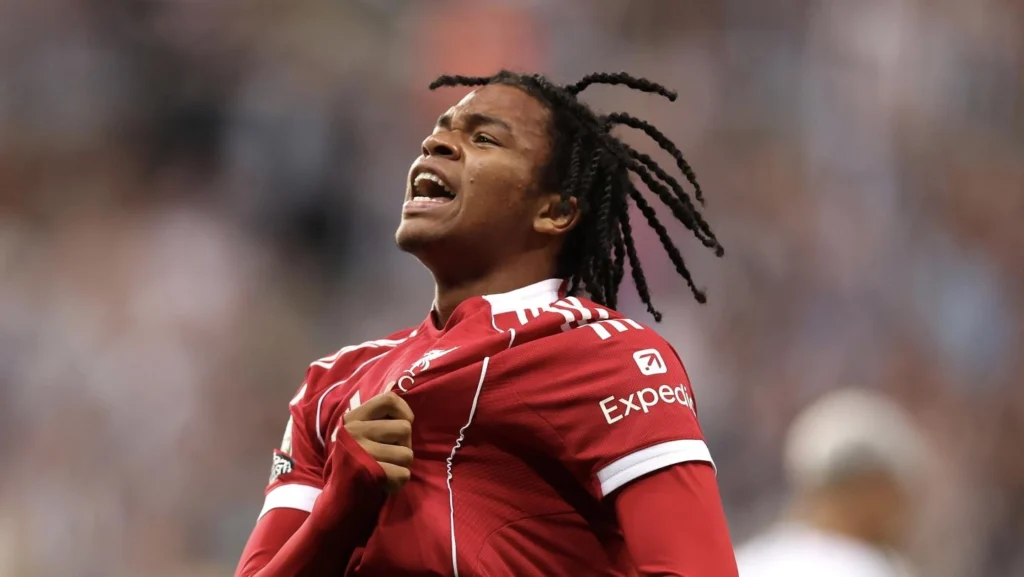
Slot’s assessment of Rio Ngumoha’s condition after the 17-year-old was withdrawn in the second half provided insight into how the manager balances utilizing young talent with realistic assessment of their physical readiness for elite competition. His assumption that Ngumoha suffered cramp “tells Rio that I expect that a Premier League game is more intense than this one,” establishing clear expectations about the physical demands awaiting the teenager.
The manager’s observation that reaching 90 minutes at Premier League level requires continued development “is completely normal for a 17-year-old” demonstrated appropriate perspective about youth player progression. His emphasis that “it’s already great for him and for Liverpool and for everybody following us that a 17-year-old makes so many minutes in a Liverpool shirt” framed Ngumoha’s contributions positively while maintaining realistic expectations about what comes next in his development.
Squad Depth and Selection Decisions
Slot’s discussion of his team selection vindicated his decision to field a relatively strong lineup rather than wholesale rotation. His acknowledgment that “I think it showed tonight that we needed a lot of first-team players to win this game” validated the approach while also serving as implicit critique of Barnsley’s quality, suggesting Liverpool required senior players to overcome League One opposition.
The manager’s explanation that he takes the FA Cup “very serious” and that he lacked sufficient squad depth to make wholesale changes demonstrated pragmatic assessment of available resources. His observation that he “couldn’t make 11 substitutions” without dipping into Under-21 and Under-18 ranks revealed how injuries and squad limitations have constrained his rotation options.
The contrast he drew with previous seasons’ approaches to cup competitions, specifically mentioning Plymouth and Crystal Palace matches where more dramatic rotation occurred, highlighted how circumstances dictate selection philosophy rather than predetermined strategies applying universally.
Respecting Barnsley’s Approach
Slot’s generous assessment of Barnsley’s performance demonstrated the respect elite managers extend to lower-league opponents who execute game plans effectively. His observation that Barnsley “can be proud of themselves, how they did and how difficult they made it for us” acknowledged their tactical discipline and competitive spirit without condescension.
The manager’s admission that most of his pre-match preparation proved irrelevant because Barnsley abandoned their typical 4-3-3 formation for a five-man defense revealed frustration with wasted preparation time while also acknowledging the tactical intelligence behind Barnsley’s approach. His statement that “I would have done if I was their manager as well” validated their strategic decision even as it complicated Liverpool’s task.
His emphasis on how long Barnsley remained competitive, with the score just 2-1 until the 84th minute, provided context for why the match felt closer than the final scoreline suggested. This acknowledgment served both to credit Barnsley’s resilience and to explain why Liverpool’s performance generated frustration despite the comfortable final margin.
The Bradley Blow
Slot’s revelation that Conor Bradley requires surgery following the knee injury sustained at Arsenal represented perhaps the press conference’s most significant news. The manager’s empathetic discussion of Bradley’s situation, acknowledging this should have been “his season” following Trent Alexander-Arnold’s departure, demonstrated genuine concern for the player beyond merely tactical implications.
His observation that Bradley has “missed out on so many games because of injury already” and that “something like this happens” just as he was establishing himself captured the cruel timing that has characterized the young defender’s season. The additional concern about Bradley’s World Cup qualification hopes with Northern Ireland added personal dimension to what could easily be discussed purely as a squad management issue.
The practical implications for Liverpool, with just “six defenders available” for “nine games in January,” created genuine concern about how Slot will navigate the coming fixtures. His reluctance to deploy Szoboszlai regularly at right-back and concern about overusing Frimpong following his recent return from injury revealed limited palatable options for covering Bradley’s absence.
Conclusion
Slot’s press conference painted a picture of a manager navigating multiple challenges simultaneously: recurring defensive lapses that undermine dominant performances, squad depth tested by injuries, young players requiring careful physical management, and a fixture schedule that demands constant rotation of limited resources. His ability to maintain perspective, extracting positives while honestly assessing deficiencies, demonstrated the emotional intelligence required for elite management. Whether he can solve the defensive concentration issues that continue plaguing Liverpool will likely determine whether this season concludes with satisfaction or disappointment.
🔴Find the Latest News on Player Ratings | Transfers | Prematch | Postmatch
Thank you for your continued support, and let’s cheer Liverpool on to success in the upcoming match. Your thoughts are always welcome in the comments section. For further insights, you may explore the official Liverpool FC website by clicking here.
YNWA (You’ll Never Walk Alone)!
The Liverpool FC Times Team
LiverpoolFCTimes.com