
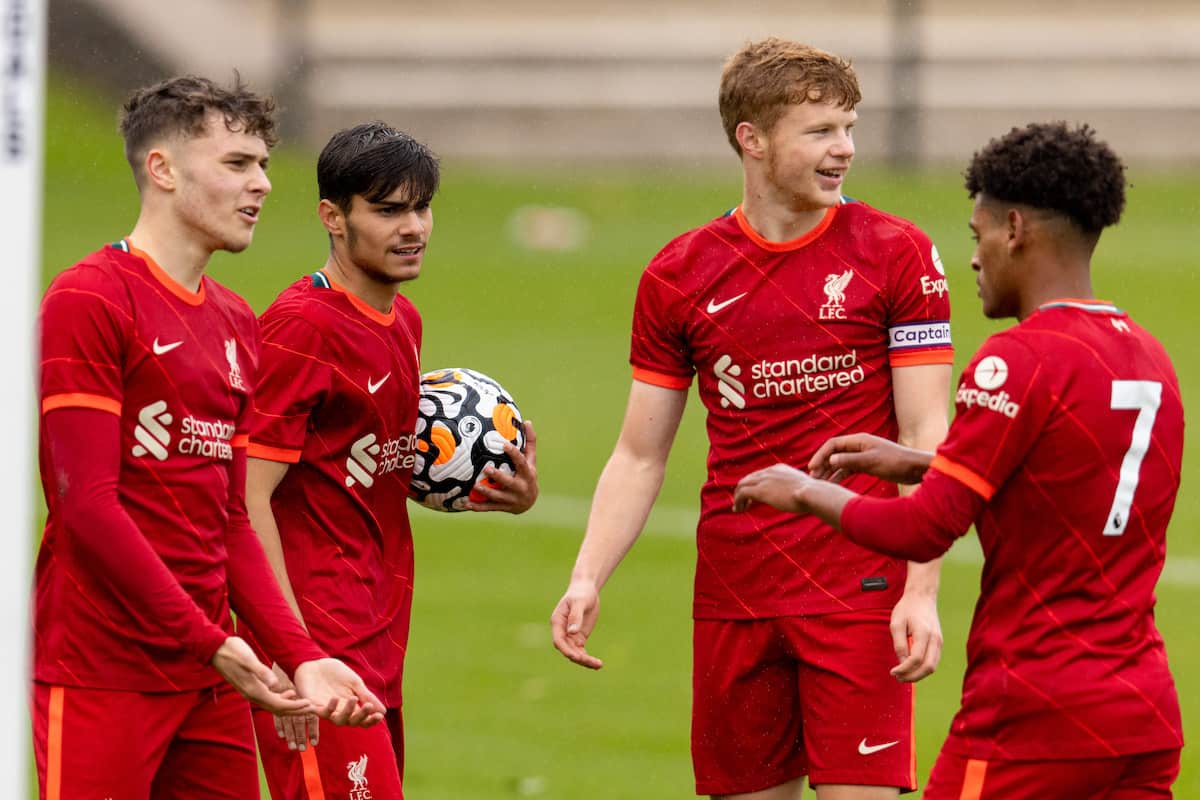
Liverpool U18s demonstrated the resilience and fighting spirit that defines the club’s identity at all levels, staging a remarkable second-half comeback to defeat Stoke City 4-2 at the Kirkby Academy on Saturday. The victory, secured through two stoppage-time goals that completed an improbable turnaround from two goals down, provides evidence that Simon Wiles is developing not just technically gifted players but young men capable of responding to adversity with determination and quality.
A Frustrating First Half
The opening period produced contrasting fortunes for Liverpool, whose performance deserved better than finding themselves two goals behind at the interval. The early stages suggested the home side would control proceedings, with Finn Inglethorpe’s 13th-minute effort epitomizing both their quality and their misfortune. His lovely chipped finish beat the Stoke goalkeeper with technique and vision beyond his years, only to strike the crossbar and deny Liverpool the lead their early pressure merited.
This near-miss would prove significant as the match narrative developed. In youth football, where confidence plays an even more pronounced role than at senior level, early goals can establish psychological dominance that influences the entire contest. Liverpool’s failure to convert their superiority into a goal left the match delicately poised, creating opportunity for Stoke to seize momentum despite being second-best in the early exchanges.
Stoke‘s opening goal arrived in the 28th minute through a well-constructed move that exploited space down Liverpool’s right flank. Elliot Fearn’s burst of pace and delivery created the opportunity for Laurence Giani to finish at the back post, demonstrating the clinical edge that Liverpool had lacked despite their territorial advantage. The goal against the run of play shifted momentum decisively, forcing Liverpool to chase the match rather than building on their early control.
The home side’s response showed character, with Joe Bradshaw coming close to an immediate equalizer. However, Sanchez Phillips‘ last-ditch intervention denied what appeared a certain goal from close range, another sliding-doors moment that shaped how the first half concluded. In a match where fine margins were determining outcomes, this defensive intervention proved crucial in allowing Stoke to extend rather than surrender their lead.
Five minutes before halftime, Giani doubled Stoke’s advantage through a move that mirrored the opener. Fearn again provided the delivery, this time a low cross that Giani finished clinically inside the box. The goal demonstrated both Stoke’s efficiency in transition and Liverpool’s vulnerability when opponents exploited space behind their defensive line. For young defenders still developing positional awareness and communication, such moments provide painful but valuable learning experiences.
The Psychology of Halftime
Trailing 2-0 at the interval despite creating the better chances, Liverpool faced a crucial test of character. Youth football matches can spiral into heavy defeats when teams lose belief after conceding goals, particularly when those goals feel undeserved based on overall performance. The halftime period provides coaches with the opportunity to reset mentality, make tactical adjustments, and remind players that matches are decided over full duration rather than by first-half scores.
Wiles’ team talk clearly emphasized that the performance level had been acceptable but that greater composure in both boxes was required. The players needed reminding that their technical quality and tactical approach had created opportunities in the first half, and that maintaining these standards while improving decision-making would create chances for a comeback. The response his young charges delivered demonstrated that the message resonated.
The Second-Half Resurgence
Liverpool signaled their intentions early in the second period, with Josh Sonni-Lambie coming close to reducing the deficit. This early attempt established that the home side had not accepted defeat, that they believed comeback remained possible despite the two-goal margin. In youth football, such moments of intent can shift psychological dynamics, making opponents who were comfortable begin questioning whether they can hold their advantage.
The breakthrough arrived just past the hour mark through a move that showcased Liverpool’s quality in transition. Inglethorpe’s neat pass released Bradshaw, whose curling finish into the far corner demonstrated composure and technique under pressure. The goal’s quality mattered as much as its timing; it reminded Liverpool’s players of their capabilities while forcing Stoke to defend their lead rather than manage the match comfortably.
At 2-1, the psychological dynamic transformed completely. Liverpool sensed vulnerability in opponents who had been confident, while Stoke faced the prospect of surrendering a lead that had seemed secure. The final half-hour would test both teams’ character in different ways: Liverpool’s ability to maintain pressure and belief, Stoke’s capacity to withstand sustained attack while protecting their advantage.
The Impact Substitutions
Tyler Martin’s introduction in the 77th minute proved a masterstroke that demonstrated Wiles’ tactical acumen and his understanding of match dynamics. Fresh legs provided energy when Liverpool needed to intensify pressure, while Martin’s arrival gave Stoke’s tiring defense a new problem to solve. The impact was immediate and decisive.
Just four minutes after entering the match, Martin drew Liverpool level with a strike that combined individual quality with team play. Inglethorpe again provided the assist, laying the ball off to the substitute who fired into the bottom left corner from just outside the area. The finish demonstrated confidence and technique, qualities essential when opportunities arrive for players fresh off the bench seeking to justify their introduction.
The goal’s timing, arriving with less than ten minutes remaining, created fascinating endgame dynamics. Liverpool could have settled for the point that a draw would secure, having recovered from two goals down to earn parity. However, their continued attacking intent demonstrated ambition and belief that victory remained achievable, characteristics that define successful teams at all levels.
Stoppage-Time Drama
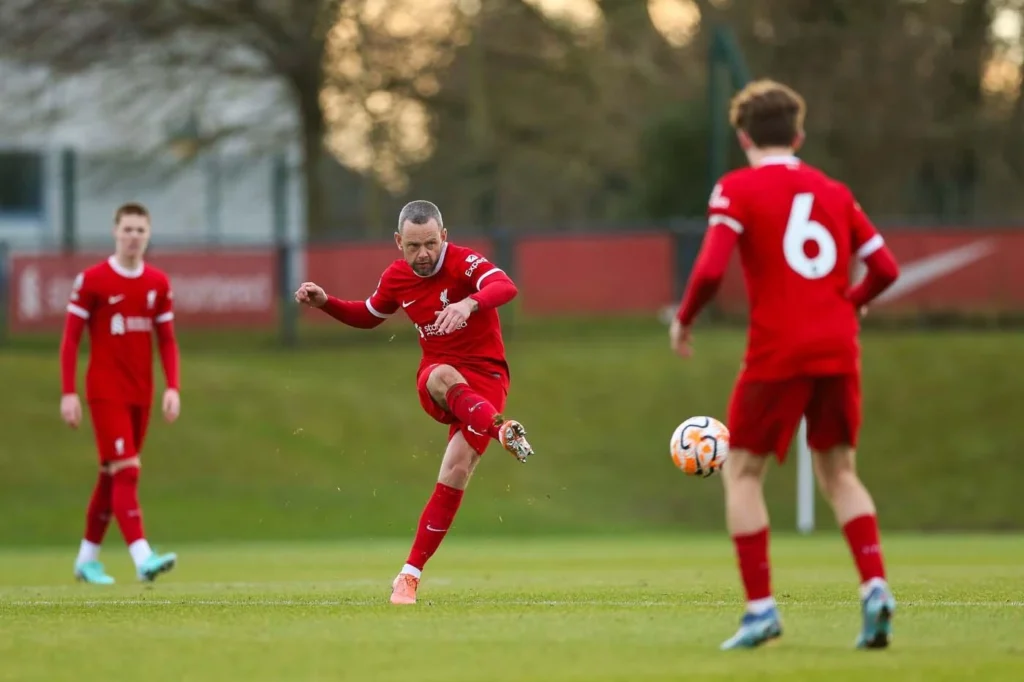
The first minute of added time brought the goal that completed Liverpool’s remarkable turnaround. Sonni-Lambie’s volleyed finish past goalkeeper Benjamin Chivers came from an opportunity created by Inglethorpe’s deflected backheel, a moment of improvisation that produced the decisive breakthrough. The young forward’s composure to execute the finish under pressure, knowing it could prove the winning goal, demonstrated mental strength alongside technical ability.
But Liverpool were not finished. In the sixth minute of stoppage time, Bradshaw secured his brace by tapping in Martin’s cross during a counter-attack that epitomized how completely the psychological dynamic had shifted. Stoke, defending desperately to preserve a point, were caught committing players forward in search of an equalizer, creating space that Liverpool exploited ruthlessly.
Individual Performances and Development
Finn Inglethorpe emerged as the match’s creative hub despite not finding the scoresheet himself. His three assists demonstrated vision, technical quality, and understanding of when to shoot versus when to create for better-positioned teammates. The fact that his early effort struck the crossbar rather than nestling in the net will frustrate him, but his overall contribution proved invaluable to Liverpool’s comeback.
Joe Bradshaw’s two goals, both featuring quality finishes, marked him as a player capable of delivering in crucial moments. His ability to curl the first goal into the far corner showed composure, while his stoppage-time tap-in demonstrated positional awareness to be in the right place when the opportunity arose.
Tyler Martin’s immediate impact after introduction provides evidence of his quality and suggests he will force his way into starting considerations for future matches. Scoring within four minutes of entering while also providing the assist for Bradshaw’s second goal represents a dream substitute appearance that justifies coaching staff faith in his capabilities.
Lessons and Development
Beyond the three points, this victory provides invaluable developmental experiences for Liverpool’s young players. They learned that matches are not decided at halftime, that technical quality and tactical discipline maintained consistently will create opportunities, and that belief in comeback possibilities must persist regardless of scoreline adversity.
For players who will face setbacks throughout their careers, experiencing this kind of comeback builds mental resilience that proves crucial during difficult periods. They now possess a reference point: a match where they faced two-goal deficits, maintained standards, and ultimately prevailed through quality and determination. This memory can sustain them through future challenges.
The coaching staff will note defensive vulnerabilities that allowed Stoke’s goals, using video analysis to highlight positioning errors and communication breakdowns that created the opportunities. However, they will balance this critical analysis with praise for the character and quality demonstrated during the comeback, reinforcing that the response to adversity matters as much as avoiding mistakes initially.
Looking Ahead
Next Saturday’s trip to Newcastle United represents Liverpool U18s’ first away fixture of 2026, an 11am GMT clash that will test whether they can replicate this performance in more challenging circumstances. Away matches at youth level present additional difficulties: unfamiliar surroundings, hostile crowds, travel fatigue, and the psychological comfort opponents draw from home advantage.
The victory against Stoke should provide confidence, but Wiles will guard against complacency by emphasizing that each match presents unique challenges requiring the same commitment and quality that delivered Saturday’s comeback. Newcastle will have studied this performance, recognizing Liverpool’s vulnerability to pace down the flanks while noting their attacking quality through central areas.
For Liverpool’s young talents, continuing their development requires consistent performance rather than occasional brilliance. Saturday’s comeback provides evidence they possess the character and quality necessary for successful careers, but transforming potential into achievement demands replicating such performances week after week, home and away, against varied opposition employing different tactical approaches.
The remarkable victory over Stoke City will be remembered fondly within the academy, a testament to resilience and quality that embodies Liverpool’s identity. Whether it represents a turning point in the season or merely an isolated highlight depends on what follows, but for now, the satisfaction of a comeback completed through determination and skill deserves celebration.
🔴Find the Latest News on Player Ratings | Transfers | Prematch | Postmatch
Thank you for your continued support, and let’s cheer Liverpool on to success in the upcoming match. Your thoughts are always welcome in the comments section. For further insights, you may explore the official Liverpool FC website by clicking here.
YNWA (You’ll Never Walk Alone)!
The Liverpool FC Times Team
LiverpoolFCTimes.com