
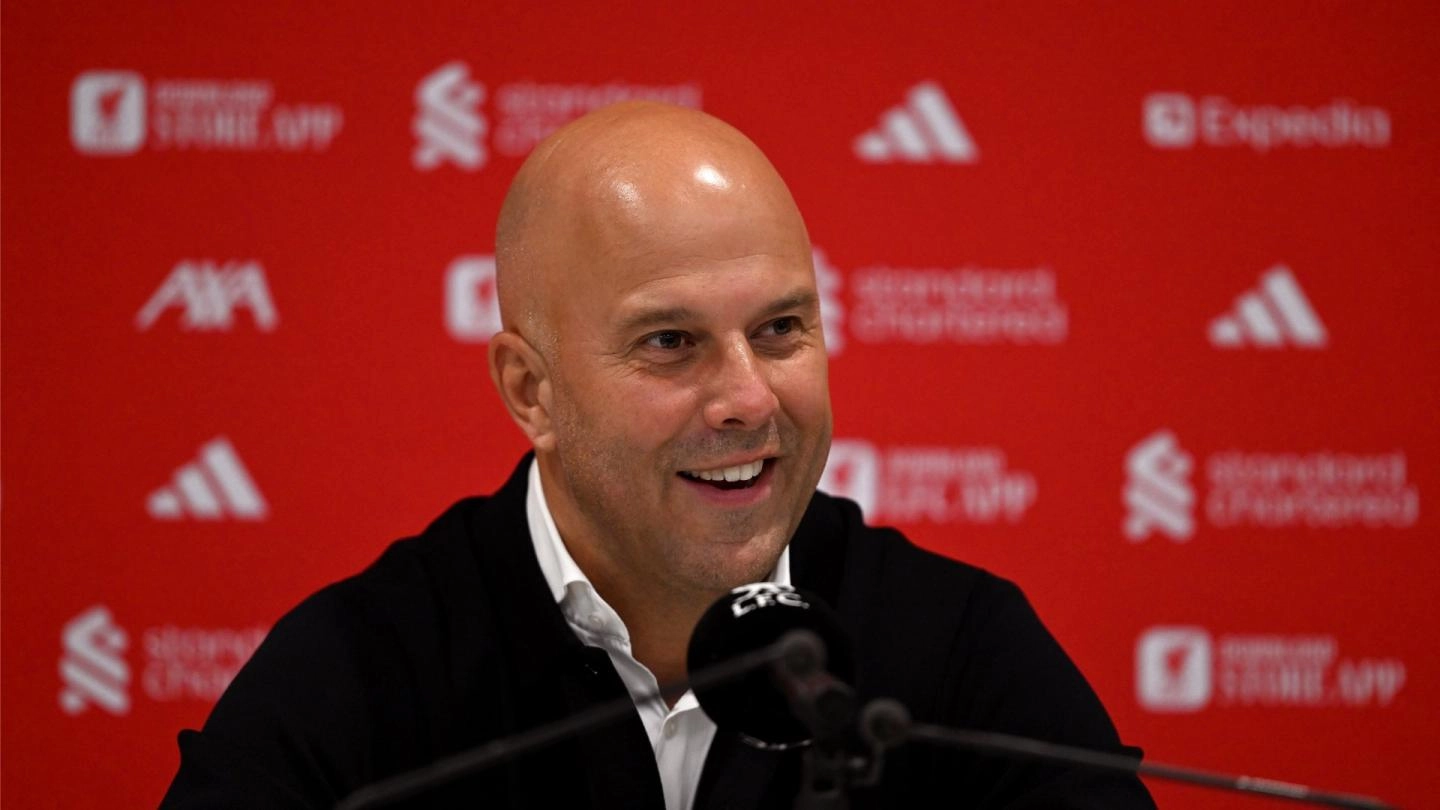
Arne Slot‘s post-match press conference following Liverpool’s 2-1 victory at Tottenham Hotspur Stadium reflected the complex emotions of a manager who has secured three crucial points while simultaneously confronting the prospect of losing key players to injury during a critical phase of the season. The Dutch coach’s analysis balanced satisfaction with the result against concern about the physical toll extracted from his already depleted squad, creating a narrative of progress achieved at potentially significant cost.
The Isak Injury Worry
Alexander Isak‘s situation dominated the early exchanges of Slot’s media obligations, with the manager’s body language and cautious language revealing genuine concern about the striker’s condition. Isak’s 56th-minute goal, a clinical finish from Florian Wirtz’s assist, should have been a moment of pure celebration. Instead, it became a source of anxiety as the Swedish international immediately signaled his inability to continue, suggesting he had suffered injury in the act of scoring.
Slot’s admission that he had “no news” on Isak’s condition was followed by a more revealing assessment based on observation and experience. “If a player scores, then gets injured and then doesn’t come back on the pitch and doesn’t try to come back, that’s usually not a good thing,” the manager explained, his choice of words indicating pessimism disguised as pragmatism. The comparison with Conor Bradley, who attempted to return before being withdrawn, suggested Isak’s injury was sufficiently serious that even attempting to continue was impossible.
The manager’s characterization of his assessment as “just a gut feeling” with “nothing medical to say about it” attempted to avoid premature diagnosis while simultaneously preparing supporters for potentially bad news. Experienced managers develop instincts about injury severity based on player reactions, the mechanism of injury, and subsequent behavior. Slot’s instincts, formed over years in professional football, were clearly warning him that Isak’s withdrawal represented more than a minor precautionary measure.
His later acknowledgment that losing Isak is “all the more frustrating” after he had just combined effectively with Wirtz captured the cruel timing of the injury. The Isak-Wirtz connection represents exactly the attacking partnership Liverpool need to flourish if they are to compete for major honors. To see it produce a goal in its nascent stages, only to immediately lose one of its components, epitomizes the frustration that has characterized Liverpool’s season. Slot’s plea to “not be too negative yet” and hope that Isak “is back with us soon” betrayed the reality that his gut feeling suggested otherwise.
Bradley’s Setback
Conor Bradley‘s injury added another dimension to Liverpool’s growing injury crisis. The young right-back had only recently returned from suspension and was deputizing due to Joe Gomez‘s continued absence. His attempt to continue playing after sustaining the injury, referenced by Slot as evidence of his commitment and competitive nature, ultimately proved futile as the manager was forced to withdraw him anyway.
Bradley’s injury is particularly problematic given the limited options Liverpool possess at right-back. With Gomez already sidelined and Jeremie Frimpong’s fitness still being carefully managed following his own lengthy injury absence, Bradley’s unavailability creates a genuine selection crisis in that position. Slot’s acknowledgment that “with Alex and with Conor we have to wait” grouped them together as injury concerns requiring assessment, suggesting neither is certain to be available for upcoming fixtures.
Tactical Adaptation and Game Management
Slot’s explanation for substituting Frimpong revealed his pragmatic approach to England’s unique treatment of injured players during matches. His observation that “this is the only country where if players are injured they need to go off for 30 seconds” demonstrated frustration with a rule he considers illogical, particularly when managing a numerical advantage against ten men. Rather than allow Frimpong to remain on the pitch while receiving treatment, only to face 30 seconds of being numerically equal to Tottenham, Slot chose to make a permanent substitution.
This decision to bring on Federico Chiesa rather than risk even brief numerical parity illustrated Slot’s attention to detail and willingness to adapt to regulations he may personally disagree with. His assessment that “we struggled a lot with our plus one” acknowledged that Liverpool had not exploited their numerical advantage as effectively as expected, making even temporary parity unacceptable. The substitution proved successful in that Liverpool maintained their lead, though the manager’s later comments about the closing stages revealed it was a closer finish than the scoreline suggests.
The Bench Concerns
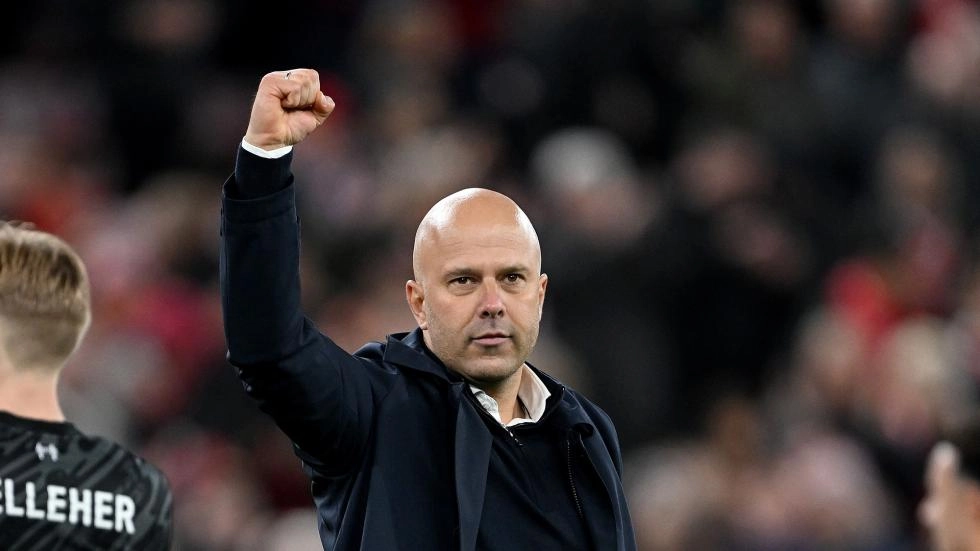
Slot’s reference to Liverpool’s bench quality, noting “you could see our bench today as well, but this is not for the first time in the last few weeks,” highlighted the cumulative effect of injuries on squad depth. A weakened bench limits tactical options during matches, reduces the quality of impact substitutions, and creates vulnerability should further injuries occur during the game itself. That Liverpool are “picking up points” despite these limitations speaks to the quality of available players and effective squad management, but also acknowledges the precarious nature of their situation.
The manager’s observation that “we are not the only team that suffers injuries in this period in England because we play so many games” positioned Liverpool’s injury crisis within the broader context of English football’s congested calendar. His characterization of widespread injuries as “quite normal” in this period reflects acceptance of fixture congestion’s inevitability rather than complaint about its unfairness. This pragmatic stance avoids appearing to make excuses while acknowledging the genuine challenges posed by the demanding schedule.
Return to Top Four Contention
Slot’s response to questions about Liverpool returning to top-four contention revealed a manager maintaining perspective about both achievements and remaining challenges. His assertion that he “wasn’t thrilled and completely happy” even when Liverpool were in the top four earlier in the season demonstrated ambitions extending beyond merely securing Champions League qualification. For a club of Liverpool’s stature and resources, competing for titles rather than simply top-four finishes represents the appropriate standard.
The manager’s reminder that Liverpool have performed “quite well” in the Champions League “with a very difficult draw” while many teams “hardly have a point” provides important context often overlooked in assessments focused solely on league position. Liverpool’s ability to navigate a challenging European schedule while managing domestic competitions and an injury crisis deserves credit, even if league form has been inconsistent.
Slot’s philosophical observation that “it’s never been as bad as people said, but it’s also true that we are definitely not perfect yet” captured his balanced perspective on Liverpool’s season. The extreme narratives that characterize modern football coverage, swinging between crisis and triumph with each result, do not reflect the nuanced reality of a team in transition. His acknowledgment that the club’s leadership “knew that change could also go with different results” demonstrated that summer’s extensive squad overhaul was undertaken with realistic understanding that immediate perfection was unlikely.
The Closing Stage Chaos
Slot’s most animated comments concerned Liverpool’s inability to retain possession during the match’s closing stages. His calculation that Tottenham possessed the ball “95 per cent” of the nine-plus minutes of added time, with Liverpool either “kicking it away or throwing it away,” revealed genuine frustration with game management. The manager’s characterization of this as “unbelievable” indicated it fell well below expected standards for professional players protecting a lead.
This possession surrender forced Liverpool to defend continuously during a period when controlling the ball would have been both safer and less physically demanding. Slot’s frustration stemmed not from Tottenham’s quality or Liverpool’s inability to create attacks, but from basic ball retention failures that unnecessarily increased pressure on his team. That Liverpool survived this period to secure victory provides relief but does not excuse the execution failures that created jeopardy.
Red Card Reflections
Slot’s comments on the red cards issued to Tottenham players revealed measured perspective on officiating decisions that significantly influenced the match. On Xavi Simons’ first-half dismissal, he acknowledged that while the player likely had no malicious intent, the technical details of the challenge (studs, height, location on opponent’s body) met red card criteria. His observation that similar challenges against Liverpool earlier in the season went unpunished without complaint about inconsistency, merely noting factual reality.
This diplomatic approach to discussing officiating serves multiple purposes. It avoids sanctions from football authorities for criticizing referees while also preventing the creation of narratives that might influence future decisions against Liverpool. Slot’s acknowledgment that “you always rely a little bit on who is the VAR and which decision referee makes” stated obvious truth without crossing into complaint or conspiracy theory.
His admission that he initially thought Ibrahima Konate had been booked rather than Cristian Romero for the second red card incident revealed the confusion that can occur on touchlines during matches. This honest acknowledgment of misperception humanizes the manager while also demonstrating that he prioritizes team management over obsessive monitoring of opposition situations.
Looking Forward with Concern
As Slot concluded his press conference and prepared for the journey back to Merseyside, the victory’s satisfaction was tempered by injury concerns that could significantly impact Liverpool’s upcoming fixtures. The potential loss of Isak and Bradley to injury, combined with existing absences and the demanding schedule ahead, creates challenges that will test both squad depth and managerial ingenuity.
The manager’s emphasis on development and progress, seeing “the team developing in a way I like to see” despite imperfections, maintains the long-term perspective necessary during transitional seasons. His acknowledgment that perhaps early-season success created unrealistic expectations for how smoothly the transition would proceed demonstrates self-awareness and realistic assessment of the process.
Liverpool’s return to top-four contention and their continued progress in the Champions League provide tangible evidence that despite struggles and setbacks, the season retains purpose and possibility. Whether they can maintain this trajectory while managing an injury crisis that shows no signs of abating will determine whether Slot’s first season at Liverpool concludes with satisfaction or disappointment. For now, three points at Tottenham represent another step forward, even if the cost of that progress remains to be fully calculated.
🔴Find the Latest News on Player Ratings | Transfers | Prematch | Postmatch
Thank you for your continued support, and let’s cheer Liverpool on to success in the upcoming match. Your thoughts are always welcome in the comments section. For further insights, you may explore the official Liverpool FC website by clicking here.
YNWA (You’ll Never Walk Alone)!
The Liverpool FC Times Team
LiverpoolFCTimes.com