
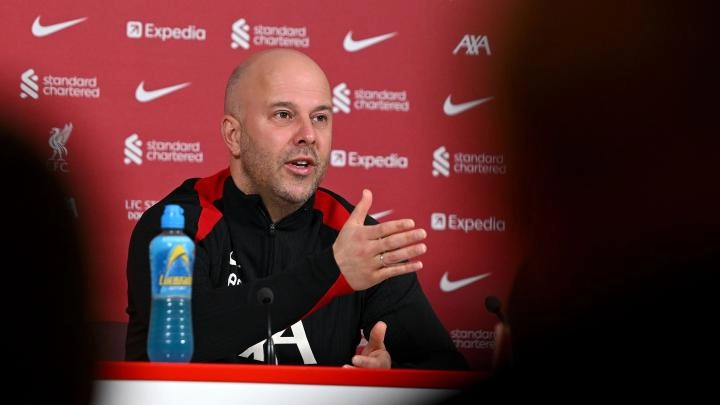
Arne Slot’s post-match press conference following Liverpool’s commanding 3-0 victory over Marseille at the Orange Velodrome revealed a manager vindicated in his tactical approach while simultaneously frustrated by how results rather than performances shape public perception. The Dutch coach’s detailed analysis exposed the fundamental difference between facing organized, proactive opponents versus the low-block tactics that have plagued Liverpool’s Premier League campaign, while also defending recent performances that failed to yield corresponding results.
The Tactical Chess Match
Slot’s opening assessment of the victory emphasized the unique challenges posed by Marseille compared to typical Premier League opposition Liverpool face. His praise for the “passionate fans,” “quality of the players,” and particularly Roberto De Zerbi as “such a good manager” who “always lets his team play so well” established respect for opponents who approached the match with tactical ambition rather than defensive caution.
The manager’s description of Liverpool’s preparation paying dividends through winning possession “three or four times in very promising situations” during the first half demonstrated the effectiveness of their pressing strategy. However, his acknowledgment that they “couldn’t find the player that was completely free” in several four-versus-three situations revealed that execution quality, rather than tactical approach, determined whether these turnovers converted into clear chances.
Slot’s observation that the one time Liverpool did find the free player, the move was ruled fractionally offside, illustrated the fine margins that separate success from frustration. This comment also hinted at broader frustrations with how narrow decisions have impacted Liverpool’s season, though he avoided dwelling on officiating complaints in favor of tactical analysis.
The Performance Versus Perception Paradox
Perhaps Slot’s most significant comments addressed the disconnect between performance quality and result-driven narratives. His detailed explanation of how perspectives shift based on outcomes rather than underlying performance metrics revealed frustration with superficial analysis that ignores process in favor of results.
The manager’s specific example of Marseille’s big chance occurring just 10 seconds after Liverpool hit the post when pursuing a second goal perfectly captured his argument. “Usually this season this ball goes in and we’re all complaining, but now the ball went over, and we extended our lead to 2-0 and 3-0,” he explained, highlighting how identical performance levels produce wildly different assessments depending on whether marginal moments fall favorably.
His assertion that “the performance is still the same but the perspective of how people probably talk about us is completely different” struck at the heart of modern football discourse, where result-oriented narratives overwhelm nuanced performance analysis. This frustration has clearly accumulated throughout a season where Liverpool have dominated possession and chances while failing to secure victories their underlying metrics suggested they deserved.
The Burnley Defense
Slot’s defense of Liverpool’s draw against Burnley demonstrated his commitment to evaluating performances beyond mere scorelines. His insistence that the Burnley result “is not the standard of this football club” acknowledged the disappointing outcome while contextualizing it within performance analysis that painted a more encouraging picture.
The revelation that Liverpool “created three or four times more chances against Burnley than we did tonight, but we scored one and tonight we scored three” encapsulated his central argument. Superior chance creation against Burnley yielded inferior results compared to Marseille, a paradox that validates Slot’s frustration with result-driven assessments that ignore underlying performance quality.
His assertion that “against Arsenal we played a very good game, against Burnley, in my opinion still and everyone can disagree, we played a very good game” invited disagreement while establishing his analytical framework. Slot evaluates performances based on process, tactical execution, and chance creation rather than solely on results, a philosophy that sophisticated analysts support even as casual observers dismiss it as excuse-making.
The Low Block Frustration
Slot’s extended discussion of tactical differences between facing proactive opponents like Marseille versus low-block strategies employed by most Premier League teams revealed perhaps his deepest frustration with English football’s tactical landscape. His observation that against low blocks “you don’t have a meeting to tell the players how they have to bring the ball out from the back because you already have the ball within 25 yards of the goal” highlighted how such matches strip away tactical complexity in favor of individual quality in one-versus-one situations.
The manager’s reference to Pep Guardiola making similar observations about the importance of dominating one-versus-ones against low blocks carried undertones of frustration that his own repeated statements on this topic receive less attention than when delivered by more established Premier League managers. His comment that “maybe when he says it people put more emphasis on it” subtly criticized how managerial reputation affects whether tactical observations receive serious consideration.
Slot’s later elaboration that teams “completely change their style” when facing Liverpool, abandoning approaches used in previous matches to employ defensive tactics specifically designed to frustrate possession-dominant opponents, explained why Liverpool struggle more in domestic competition than European fixtures. The unpredictability of facing opponents who deviate from their established patterns complicates preparation, while the tactical conservatism of low-block approaches reduces matches to exercises in breaking down massed defenses rather than tactical chess matches.
Salah’s Seamless Return
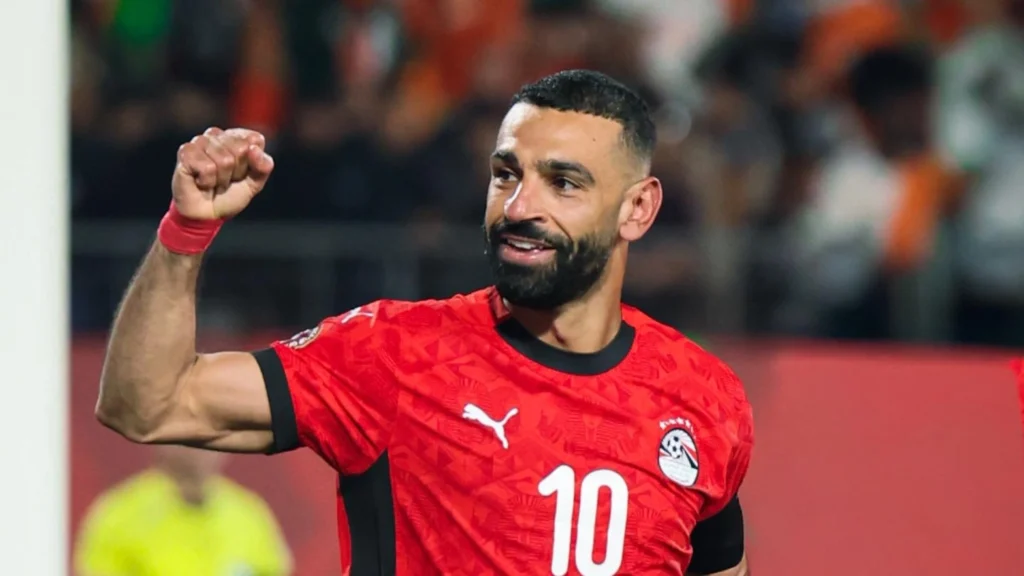
The manager’s assessment of Mohamed Salah‘s performance following his return from Africa Cup of Nations duty revealed both relief at the Egyptian’s professionalism and recognition of his enduring importance. Slot’s observation that “it helps he is already for so long with us so he knows his teammates and he knows how we want to play” acknowledged that Salah’s familiarity with Liverpool’s systems facilitated immediate reintegration despite his month-long absence.
The praise for Salah’s fitness levels after competing in a different team environment for an extended period demonstrated appreciation for the forward’s professional approach to maintaining physical condition. That Salah could complete 90 minutes immediately upon return, creating a chance that “usually is a goal for him” even if it didn’t convert, validated Liverpool’s trust in his preparation and dedication.
Gomez’s Outstanding Performance
Slot’s specific highlighting of Joe Gomez‘s “outstanding performance with an important role in our 3-0” carried particular significance given the defender’s limited playing time over the previous 18 months. The manager’s acknowledgment that Gomez has “suffered sometimes from injuries, sometimes I didn’t play him when he was fit” demonstrated honest assessment of how both medical issues and selection decisions have restricted his opportunities.
The fact that Gomez’s recent appearances came primarily in “League Cup and FA Cup” fixtures made his Champions League performance all the more impressive, suggesting he possesses the quality to contribute at the highest level when opportunities arise. This performance provides Slot with additional defensive options during a period when squad depth has been tested by injuries and the relentless fixture schedule.
The Play-Off Avoidance Achievement
Slot’s discussion of avoiding Champions League play-offs revealed the strategic importance of Wednesday’s victory beyond the immediate satisfaction of a convincing performance. His observation that this objective “has been crucial from the start” demonstrated forward-thinking planning about managing squad resources across a demanding season competing in multiple competitions.
The manager’s revelation that Liverpool have “only been 54 minutes behind” across their last 13 matches illustrated how competitive they have remained despite persistent challenges. However, his acknowledgment that they have “multiple times had a lead” implicitly referenced the frustrating pattern of surrendering advantages that has characterized their season.
Slot’s explanation that Liverpool have “three long-term injuries” and haven’t possessed “as big a squad as some of our competitors have” from the season’s start provided context for why avoiding additional February fixtures carries such importance. The physical toll of competing across multiple competitions with limited rotation options has tested Liverpool’s depth in ways that more fortunate clubs have avoided.
The Physical Toll on Key Players
Perhaps Slot’s most revealing comments addressed the accumulated fatigue affecting his most-used players. His statement that “we’re already seven or eight months into the season and I don’t think Virgil van Dijk has had more than three days off” exposed the relentless demands placed on Liverpool’s captain. The extension of this observation to Ryan Gravenberch and “all these players” indicated that the workload issue extends across multiple crucial positions.
The manager’s suggestion that constant utilization of the same players “could be maybe a reason why you run out of energy in some games where we’ve conceded” represented the closest he has come to offering excuses for Liverpool’s defensive lapses. While carefully framed as speculation rather than definitive explanation, this acknowledgment that physical fatigue might contribute to concentration errors provides additional context for recurring issues that have undermined otherwise strong performances.
Despite these challenges, Slot’s praise for how his players “constantly show up and they constantly show mentality no matter how many setbacks we’ve had this season” demonstrated appreciation for their professionalism and resilience. The fact that Liverpool secured “a very good performance” again despite accumulated fatigue and disappointments validated his faith in the squad’s character.
Tactical Adjustments and Chess Matches
Slot’s appreciation for how De Zerbi adjusted Marseille’s approach during the match revealed his enjoyment of tactical battles against opponents who engage proactively. His observation that “he does adjust small things to our game plan” acknowledged the Italian manager’s tactical sophistication while explaining why such matches prove “much more interesting than facing low blocks.”
The requirement to “be sharp, you have to be alert and you have to adjust in your tactics” when facing proactive opponents creates the kind of intellectual challenge that elite managers relish. Slot’s contrasting observation that “against low blocks it has nothing to do with tactics” might overstate the case slightly, but captures his frustration with how such approaches reduce football to exercises in individual quality rather than collective tactical execution.
The Preference for Proactive Opposition
When asked whether facing teams that don’t employ low blocks is “easier,” Slot provided a nuanced response that distinguished between predictability and difficulty. His acknowledgment that “if you face low blocks you have the ball a lot and usually if you have the ball a lot you could assume you win the game” captured the statistical probability that possession dominance should correlate with victory.
However, his observation that “because of multiple reasons this season we weren’t able to” convert possession and chance creation advantages into results exposed Liverpool’s fundamental problem. The reasons he alluded to without elaborating, defensive concentration lapses, clinical finishing deficiencies, and marginal officiating decisions, have combined to undermine what underlying metrics suggest should be a more successful season.
Slot’s assertion that it’s “nicer to approach a game when you watch games of Marseille or Madrid or Atletico Madrid” because these teams maintain tactical consistency revealed his frustration with Premier League opponents who “completely change their style” specifically when facing Liverpool. This unpredictability, while understandable from opponents’ perspectives, complicates Liverpool’s preparation and reduces the value of extensive video analysis and tactical planning.
The manager’s description of sometimes “standing on the line and just having ball possession and hoping something happens” against low blocks captured the passivity such approaches can impose on even dominant teams. While he acknowledged Liverpool “train on certain things” and “try to make small details better,” the fundamental challenge of breaking down massed defenses through individual quality in one-versus-one situations remains.
Conclusion: Vindication and Ongoing Challenges
Slot’s press conference following the Marseille victory revealed a manager whose tactical approach has been vindicated by a convincing performance against quality opposition, yet who remains frustrated by how results against defensive opponents have shaped narratives about Liverpool’s season. His detailed analysis of performance versus perception, the unique challenges of facing low blocks, and the physical toll on his most-used players provided important context for understanding Liverpool’s campaign.
The victory secured Liverpool’s direct progression to the Champions League Round of 16, avoiding the additional February fixtures that would have further tested an already stretched squad. This achievement, combined with the quality of performance against Marseille, provides encouragement that when facing opponents who engage tactically rather than merely defend, Liverpool possess the quality and organization to compete with Europe’s best.
However, the ongoing challenge of converting dominance into victories against Premier League opponents employing low-block tactics remains unresolved. Whether Liverpool can solve this puzzle, finding the clinical finishing and defensive concentration required to turn superior performances into corresponding results, will likely determine whether this season concludes with satisfaction or disappointment. For now, the Marseille victory provides evidence that Liverpool’s underlying quality remains strong, even if their results don’t always reflect it.
🔴Find the Latest News on Player Ratings | Transfers | Prematch | Postmatch
Thank you for your continued support, and let’s cheer Liverpool on to success in the upcoming match. Your thoughts are always welcome in the comments section. For further insights, you may explore the official Liverpool FC website by clicking here.
YNWA (You’ll Never Walk Alone)!
The Liverpool FC Times Team
LiverpoolFCTimes.com