
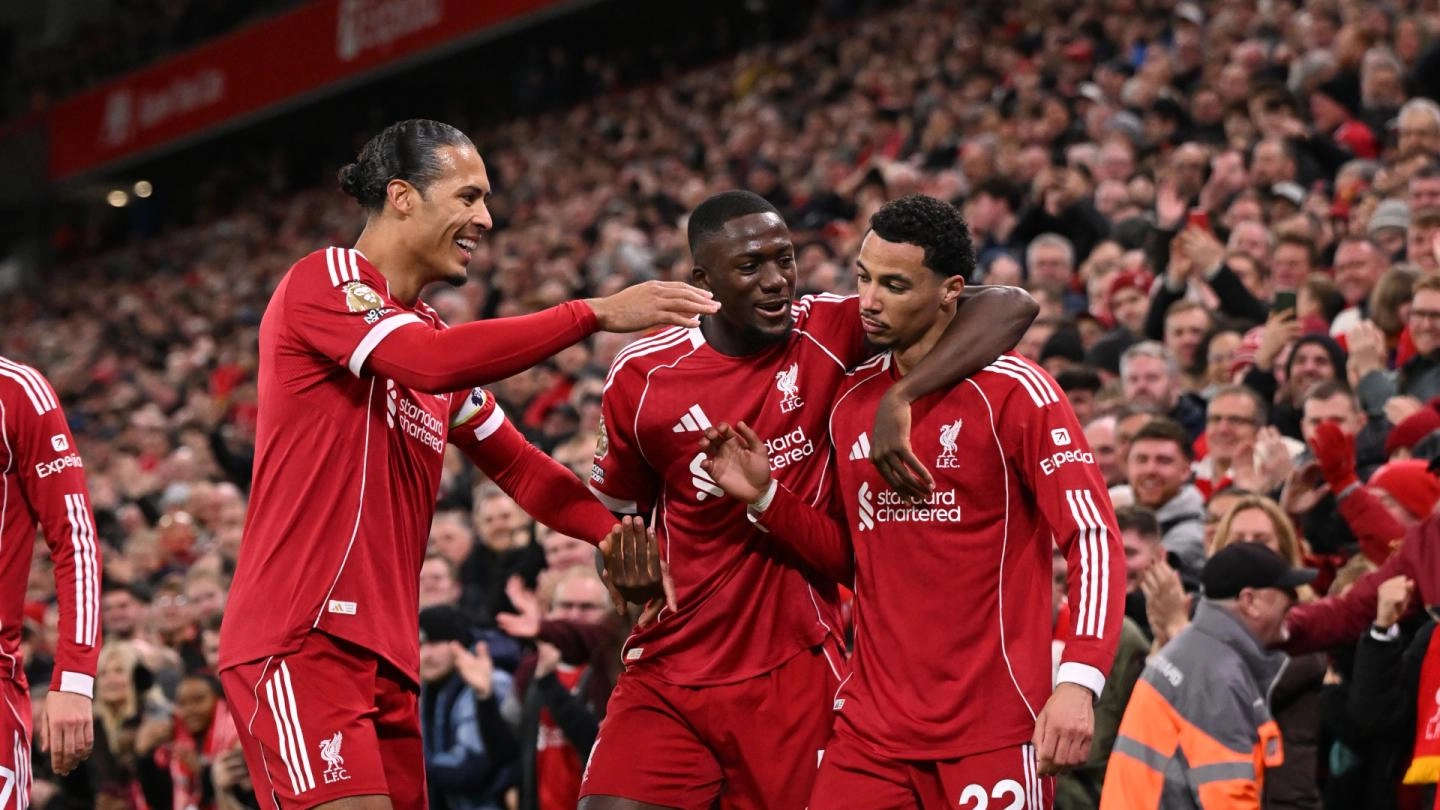
Liverpool travel to Craven Cottage on Sunday afternoon with cautious optimism about Joe Gomez’s potential return tempering concerns about a squad stretched to its limits by injuries, international commitments, and the relentless demands of the fixture schedule. Arne Slot’s pre-match update revealed both the challenges facing his depleted squad and the careful player management strategies he has employed to keep his team competitive through what he described as “two months of non-stop football.”
Gomez’s Potential Return
Joe Gomez‘s expected return to training on Friday represents potentially significant news for Liverpool’s defensive options. The versatile defender has missed Liverpool’s last three matches due to the muscle injury sustained against Brighton & Hove Albion in mid-December, an absence that has tested Liverpool’s defensive depth and forced Slot into tactical adjustments. Slot’s expectation that Gomez would train on Friday suggests the defender has progressed sufficiently through his rehabilitation to resume team activities, though the timeline between returning to training and being available for match selection varies based on individual circumstances.
The cautious nature of Slot’s language, stating he “expects” rather than confirms Gomez’s training participation, reflects the uncertainty inherent in muscle injury recovery. Medical staff monitor these injuries closely during the final rehabilitation stages, as premature return risks aggravation that could extend absence significantly. The fact that Gomez has reached the stage where training participation is realistic suggests his recovery has progressed smoothly, though whether he will be available for selection at Fulham depends on how his body responds to the increased demands of full training.
Gomez’s versatility makes his potential return particularly valuable. His ability to operate at center-back, right-back, or left-back provides tactical flexibility that allows Slot to adjust formations and respond to in-game developments without compromising quality. During his absence, Liverpool have managed through various defensive combinations, but having Gomez available again expands options significantly and provides insurance against further defensive injuries.
Endo’s Continued Absence

Wataru Endo‘s ongoing unavailability due to the ankle injury sustained in early December represents a more concerning situation given the extended timeline since the initial problem. Slot’s confirmation that Endo is “not yet ready” suggests the Japanese midfielder faces additional rehabilitation before he can resume training, let alone match action. This extended absence indicates either that the initial injury was more severe than publicly disclosed or that complications have emerged during the recovery process.
Endo’s absence removes a specific skill set from Liverpool’s midfield options that has proven difficult to replicate. His defensive screening capabilities, positional discipline, and ability to protect the back line provided tactical versatility that allowed Slot to adjust approaches based on opposition threats. Without Endo available, Liverpool’s midfield setup has required adjustment, with players like Ryan Gravenberch and Curtis Jones assuming different responsibilities to compensate for his absence.
The cumulative effect of Endo’s extended absence creates challenges beyond just the immediate unavailability. Players who miss substantial periods require time to rebuild match fitness and sharpness even after medical clearance to train. This means Endo’s eventual return will likely involve a gradual reintegration period rather than immediate restoration to the starting lineup, extending the period before Liverpool can fully utilize his capabilities.
Managing Wirtz’s Fitness
Slot’s detailed explanation of his decision to substitute Florian Wirtz during the goalless draw with Leeds provided important insight into the careful player management required during congested fixture periods. The revelation that Wirtz felt hamstring discomfort “too much” two days after the Wolverhampton match, preventing him from training until Wednesday, demonstrated the fine margins involved in keeping players available.
The manager’s decision to withdraw Wirtz as a precautionary measure reflected risk management that prioritizes long-term availability over short-term performance optimization. Hamstring injuries notoriously can escalate from minor discomfort to significant damage if players continue competing without adequate recovery. By removing Wirtz from the match despite Liverpool’s need for creative quality, Slot protected the German playmaker from potential injury that could sideline him for weeks or months.
This decision-making process illustrates the complex calculations managers must make during fixture congestion. Every substitution represents a trade-off between maintaining on-field quality and protecting player health for future matches. Slot’s reference to having “four players on the bench that haven’t played any minutes in the Premier League” highlighted the limited quality available as replacements, making the decision to remove Wirtz even more difficult. However, his assessment that the risk of Wirtz sustaining injury outweighed the benefit of his continued participation demonstrated appropriate prioritization.
The manager’s acknowledgment that Cody Gakpo represented “a good replacement” attempted to frame the substitution positively while recognizing that replacing Wirtz inevitably reduced Liverpool’s attacking threat. This honest assessment captured the reality that squad depth, while adequate for survival, does not fully compensate for losing key players to injury or precautionary withdrawal.
The Broader Context of Fixture Congestion
Slot’s observation that his squad has endured “two months of non-stop football” with most players having experienced “six or seven months of non-stop playing football” provided important context for understanding Liverpool’s injury challenges. The physical and mental toll of this schedule affects players’ ability to recover between matches, increases injury risk, and compromises performance quality even when players remain technically available.
Modern football’s demands have intensified to levels that test human physiological limits. Players require 48-72 hours for optimal physical recovery between maximum-intensity matches, yet fixture scheduling often provides barely 48 hours between kickoffs. This insufficient recovery period forces players to compete while carrying accumulated fatigue, creating conditions that increase injury risk and make minor discomfort more likely to escalate into significant problems.
Slot’s emphasis on needing to “keep players available with at least some Premier League experience” revealed the challenge of balancing current match requirements against future needs. Overusing available players risks injuries that could remove them from availability for crucial upcoming fixtures, yet underutilizing them by excessive rotation risks dropping points in current matches. Finding the optimal balance between these competing demands represents one of management’s most difficult challenges during congested periods.
Positive Developments from the Leeds Match
Despite Liverpool’s frustration at dropping two points against Leeds through a goalless draw, Slot identified several positive developments that provide encouragement. The fact that “everyone stayed fit” represented perhaps the most important outcome given Liverpool’s injury concerns and the physical intensity required during the match. Avoiding fresh injuries during the Leeds encounter preserved Liverpool’s available playing resources for upcoming fixtures during a period when depth has been critically tested.
The clean sheet against Leeds offered additional encouragement, particularly given Liverpool’s recent defensive vulnerabilities. While goalless draws frustrate supporters and feel like missed opportunities, defensive solidity provides a foundation for success that attacking problems can be addressed more readily than systematic defensive failures. Liverpool’s ability to prevent Leeds from scoring despite the visitors’ attacking quality demonstrated organizational competence that bodes well for future matches.
Slot’s relief that Ibrahima Konate avoided a yellow card that would have triggered suspension represented another small victory extracted from a disappointing result. Konate had entered the match one booking away from a one-match ban, creating risk that he might accumulate the suspension-triggering caution during normal defensive duties. His successful navigation of the match without disciplinary incident meant Liverpool retained his availability for crucial upcoming fixtures including the Fulham trip.
The Long-Term Absences
Mohamed Salah‘s continued unavailability due to Africa Cup of Nations duty with Egypt represents an expected but nonetheless significant challenge for Liverpool’s attacking options. The Egyptian forward’s absence removes Liverpool’s most reliable goal-scoring threat during a period when converting chances has proven problematic. His extended international commitment will test Liverpool’s attacking depth and creativity as they navigate crucial fixtures without his quality.
Alexander Isak’s classification as a long-term absentee following his recent ankle surgery continues to impact Liverpool’s forward options. The Swedish striker was finally approaching peak form when injury struck, making his absence particularly frustrating given the timing. His recovery timeline of several months means Liverpool must find goal-scoring solutions from alternative sources throughout this crucial period.
Giovanni Leoni’s anterior cruciate ligament injury maintains him as a long-term absentee, though his limited first-team experience means his unavailability impacts squad depth more than immediate selection. The young defender’s extended rehabilitation removes a potential option during a period when defensive injuries have tested Liverpool’s resources.
Fulham’s Challenges
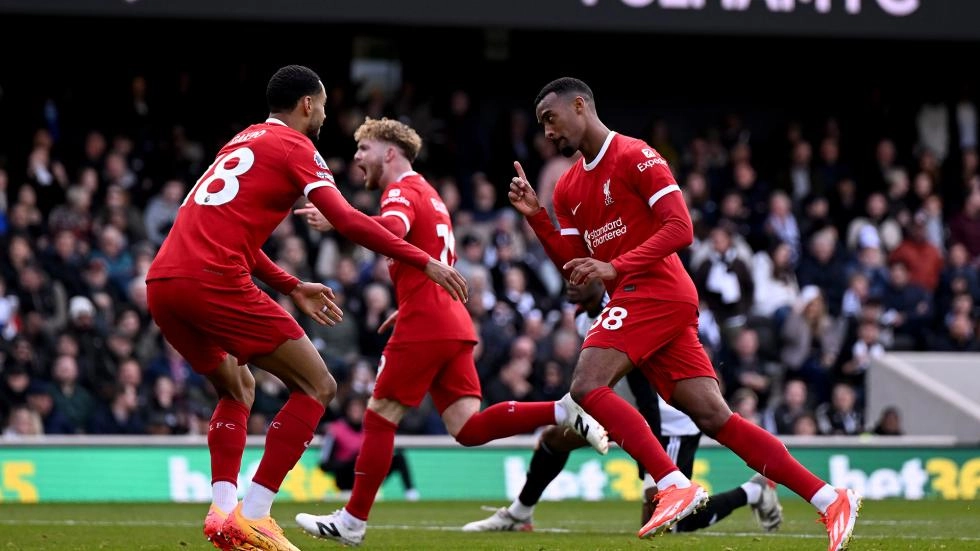
Liverpool’s squad concerns are matched by significant absences facing Marco Silva’s Fulham. Josh King and Kenny Tete face “big possibilities” of missing Sunday’s encounter, removing two regular contributors from Fulham’s lineup. Silva’s acknowledgment that he would need to continue assessing their fitness suggests neither player has made sufficient recovery progress to guarantee availability.
Ryan Sessegnon’s continued absence and Rodrigo Muniz’s injury problems compound Fulham’s squad challenges, though Silva maintains optimism about his team’s capability to compete. The Cottagers also lose Calvin Bassey, Samuel Chukwueze, and Alex Iwobi to Africa Cup of Nations duty, creating similar international absence challenges to those Liverpool faces with Salah’s departure.
Silva’s assessment that Liverpool have shown “better” recent results while acknowledging their frustration at not defeating Leeds demonstrated respect for the opposition while recognizing opportunities. His observation that “the Premier League is very tough” and that both teams face quick turnarounds between matches highlighted the shared challenges of fixture congestion.
Statistical Context
The statistical comparison between Fulham and Liverpool reveals interesting patterns that will influence tactical approaches. Fulham’s superior shooting accuracy of 46.5% compared to Liverpool’s 41.8% suggests they create higher-quality chances, though Liverpool’s greater shot volume (82 versus 72) indicates they generate more opportunities overall. Fulham’s slightly better conversion rate of 16.8% versus Liverpool’s 15.3% demonstrates clinical finishing that Liverpool must respect.
Liverpool’s four-goal advantage in total scoring (30 versus 26) reflects their greater attacking output over the season, supported by their superior assist total (20 versus 16) indicating more varied creative sources. These statistical patterns suggest a match where Liverpool should dominate possession and chance creation but must be wary of Fulham’s clinical finishing on limited opportunities.
Looking Ahead to Craven Cottage
As Liverpool prepare for Sunday’s 3pm kickoff at Craven Cottage, Slot must balance the need for points to maintain momentum against the requirement to protect his depleted squad from further injury. Gomez’s potential availability provides welcome reinforcement, though whether he starts or features from the bench depends on his training response. The continued absences of Endo, Salah, Isak, and Leoni limit options while intensifying pressure on available players to perform consistently.
Fulham’s home advantage and their own quality, demonstrated by their competitive league position, ensures this will be a challenging fixture regardless of squad circumstances. Silva’s tactical acumen and his team’s ability to capitalize on limited chances mean Liverpool cannot afford defensive lapses or wasteful finishing. The match represents an opportunity to build on the defensive solidity shown against Leeds while rediscovering the attacking efficiency that has been absent recently.
For Slot, successful navigation of this fixture requires optimal squad management, tactical flexibility to accommodate available personnel, and hopefully, some positive fortune regarding injuries and match outcomes. The fact that Liverpool have kept players fit through recent matches provides encouragement, but the relentless schedule ahead means the challenge of maintaining availability while competing effectively will continue testing his management skills throughout the coming weeks.
🔴Find the Latest News on Player Ratings | Transfers | Prematch | Postmatch
Thank you for your continued support, and let’s cheer Liverpool on to success in the upcoming match. Your thoughts are always welcome in the comments section. For further insights, you may explore the official Liverpool FC website by clicking here.
YNWA (You’ll Never Walk Alone)!
The Liverpool FC Times Team
LiverpoolFCTimes.com