
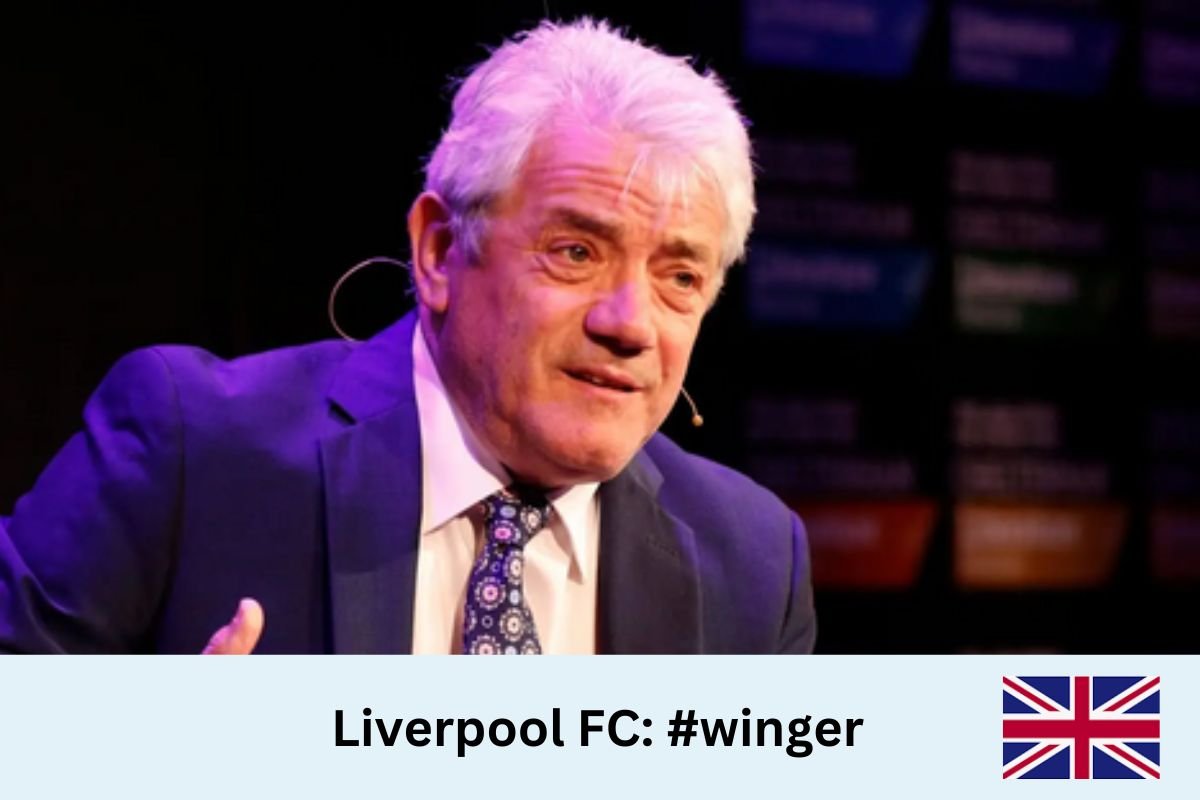
Kevin Keegan has died. Those three words, announced by his family in a quiet statement on Monday morning, sent a wave of grief across the entire world of football that is still being felt. The former Liverpool forward, twice winner of the Ballon d’Or, European Cup champion, FA Cup winner, three-time First Division title holder and one of the most beloved figures the sport has ever produced, passed away peacefully on Monday, July 20, 2026 at the age of 75, surrounded by his wife Jean and his daughters Laura and Sarah. He had been battling stage four cancer, first diagnosed in January 2026, with characteristic courage and characteristic refusal to make it anyone else’s burden. The family’s statement was simple, dignified and utterly heartbreaking. “Kevin, a double Ballon d’Or winner, was a much loved husband, father and grandfather. The family would like to thank Kevin’s incredible medical team for all their support. This is a hugely difficult time and they are requesting space and privacy.”
Within hours, tributes had poured in from across the globe. But perhaps none carried more resonance, more historical weight, or more personal significance than the words shared by Sir Kenny Dalglish, the man Bill Shankly chose to replace Keegan at Liverpool in 1977, and one of the very few human beings on this planet who can truly understand what it meant to wear that famous number seven shirt in the era when Kevin Keegan made it his own.
Dalglish’s Words: A Tribute From a Friend, a Peer, a Successor
“Very saddened to hear of the passing of Kevin Keegan,” Dalglish said. “Kevin was one of the very best players of his generation and wore Liverpool’s famous number seven shirt with great distinction. His achievements on the pitch were exceptional, but he was also a wonderful person and a genuine gentleman. Kevin’s qualities didn’t stop when he finished playing. He went on to become an outstanding manager, and what he built at Newcastle United brought belief, excitement and pride back to the football club. He gave so many people wonderful memories and his teams played the game in a way that supporters loved to watch. Football has lost one of its true greats. My thoughts are with Jean, Laura, Sarah and all of Kevin’s family and friends at this very sad time. Rest in peace, Kevin. YNWA.”
Every sentence in that tribute was earned. Dalglish and Keegan were never direct teammates at Liverpool in the true sense of the word, but the relationship between them was unique in English football history. When Keegan informed Shankly that he intended to leave Anfield for Hamburg in 1977, the Liverpool manager embarked on a search for his successor. The man he found was Dalglish, signed from Celtic for what was then a British record transfer fee of £440,000. The baton was passed from one of British football’s most brilliant attackers directly to another. That both went on to become legends of the game, that both came to define eras at the clubs they played for, and that both are now regarded as among the finest British players ever to have lived, speaks to the depth of quality Liverpool attracted under Shankly and Bob Paisley throughout that extraordinary decade.
A Liverpool Career For the Ages
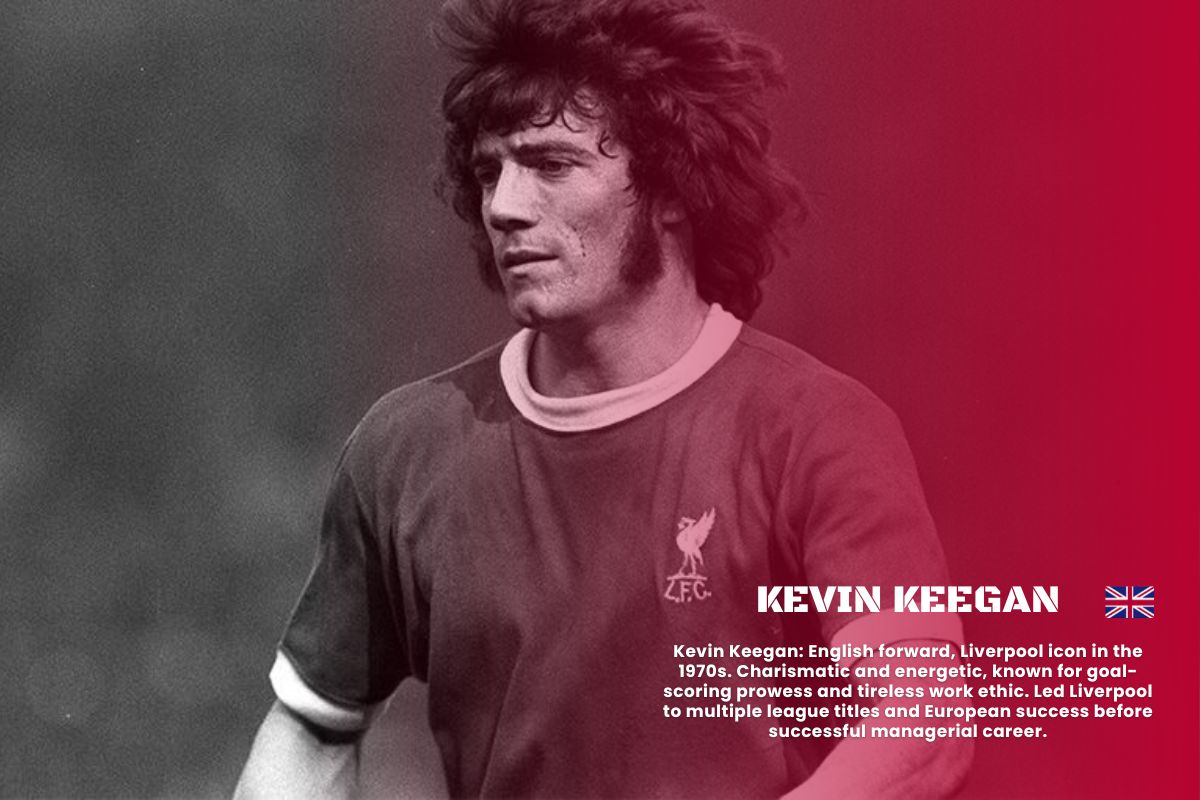
Kevin Keegan’s six years at Liverpool, from 1971 to 1977, represent one of the most transformative individual contributions in the club’s modern history. Signed by Bill Shankly from Scunthorpe United for just £33,000 in May 1971, it was one of the greatest pieces of recruitment business any manager in the world has ever conducted. Keegan made his debut in the First Division on 14 August 1971, scoring after just 12 minutes against Nottingham Forest. By the end of that debut season, he was already established as one of the most exciting players in English football.
What followed across six seasons was a career of staggering achievement and brilliance. Three First Division titles. An FA Cup. Two UEFA Cups. And most memorably of all, the European Cup in Rome in 1977, when Liverpool defeated Borussia Monchengladbach 3-1 in a magical evening on the continent that announced the Reds as one of the dominant forces in world football. Keegan, typically, was at the heart of it, tormenting the German defenders throughout and providing the energy and movement that defined everything Bob Paisley’s side were about. That night in Rome was Keegan’s 323rd and final appearance for the club, and it was, in the most fitting way imaginable, one of his very finest.
In total, Keegan scored 100 goals across those 323 appearances, a record that places him among the most prolific forwards in the club’s history. Jamie Carragher, one of the greatest servants Liverpool has produced, said on Monday that Keegan was “one of the greatest players this country has ever produced” and “one of the most important men” in making Liverpool Football Club what it is today. Those words, from a man who never saw Keegan play in person but who has spent a lifetime studying and discussing the history of the club he loves, tell you everything about the size of the legacy being mourned.
Hamburg, the Ballon d’Or and International Glory
The story of what Keegan achieved after leaving Liverpool is, if anything, even more remarkable than what he delivered at Anfield. Moving to Hamburg for £500,000 in the summer of 1977, he threw himself into German football with the same relentless energy and appetite that had characterised every stage of his career. The results were spectacular. He helped Hamburg win the Bundesliga title in 1978-79 and reach the European Cup final. And across back-to-back seasons, he was voted the best player in Europe, claiming the Ballon d’Or in both 1978 and 1979. He is, to this day, the only English player ever to win the award more than once, and one of just four Englishmen in history to win it at all. England manager Thomas Tuchel, paying tribute on Monday, said with genuine awe: “He won every honour possible and to be named the best player in the world two times was an unbelievable achievement.”
Keegan represented England 63 times and was, for a significant portion of his career, regarded as not just the best player England had but one of the finest players in the world. His international retirement in 1982 marked the end of a playing chapter that had begun in the lower leagues and reached the very pinnacle of the global game. From Scunthorpe to the Ballon d’Or. From £33,000 to the European Cup. The arc of that career is almost impossible to comprehend.
Newcastle, Management and an Undying Love
As a manager, Keegan built his most enduring legacy at Newcastle United, the club where he also played from 1982 to 1984 and where the supporters worshipped him with an intensity that matched anything he experienced at Anfield. Returning as manager in 1992, he took a club marooned in the old Second Division and transformed it, guiding them to promotion and then building what became known as the Entertainers, a Newcastle side that came agonisingly close to winning the Premier League in 1995-96 in what remains the most dramatic title race in the competition’s history. The excitement, the goal-fests, the belief that Newcastle injected into a fanbase that had waited decades for success, all of it bore the unmistakable hallmarks of Kevin Keegan’s philosophy: attack, entertain, give the supporters something to celebrate.
Newcastle’s statement on Monday captured the depth of what he meant to the club and the city. “Kevin was more than a legendary footballer and manager. He was the beating heart of Newcastle United for generations of supporters.”
Liverpool FC’s official statement described themselves as “deeply saddened” by the loss, confirming that a special tribute will take place at Anfield at the next appropriate moment. Fans have already been gathering outside the ground, laying scarves and flowers at the Shankly Gates in tribute to a man who arrived there as a raw 20-year-old from Scunthorpe and left six years later as one of the most celebrated footballers on the planet.
Kevin Keegan. King Kev. The number seven who wore that shirt with more distinction than almost anyone before or since. Football has indeed lost one of its true greats. You will never walk alone.
🔴Find the Latest News on Player Ratings | Transfers | Prematch | Postmatch
Thank you for your continued support, and let’s cheer Liverpool on to success in the upcoming match. Your thoughts are always welcome in the comments section. For further insights, you may explore the official Liverpool FC website by clicking here.
YNWA (You’ll Never Walk Alone)!
The Liverpool FC Times Team
LiverpoolFCTimes.com