

There are athletes who are defined by what happens to them. And then there are athletes who are defined by how they respond to what happens to them. Hugo Ekitike, at just 23 years old, belongs firmly and emphatically in the second category. In an exclusive interview with GQ Magazine this week, the Liverpool striker spoke publicly for the first time at length about the Achilles tendon rupture that ended his debut season in the most devastating fashion, robbed him of a World Cup place with France, and now demands the most gruelling rehabilitation process a professional footballer can endure. His words were not those of a broken man. They were the words of someone who has looked the hardest challenge of his career directly in the eye and decided, with quiet clarity, to accept it, embrace it, and come back better.
The Night Everything Changed
To understand where Ekitike is now, it is necessary to revisit the night of Tuesday, 14 April 2026. Anfield was buzzing with European atmosphere as Liverpool hosted Paris Saint-Germain in the Champions League quarter-final second leg, needing to overcome a first-leg deficit from a bruising evening at the Parc des Princes. Ekitike had been one of Liverpool’s most important players throughout what had been, by any honest assessment, a season disrupted by injury for almost every member of Arne Slot’s squad.
In the 22nd minute, with the tie still very much alive, Ekitike slipped on the Anfield turf, collapsed immediately and lay stricken in the centre of the pitch. There was no challenge involved, no collision, no reckless tackle. Just a moment of misfortune so cruel that it took the breath from everyone who witnessed it. He was stretchered off the pitch in tears, and those watching in the stadium and at home already feared the worst. The confirmation arrived two days later. A full rupture of the Achilles tendon. Surgery required. Recovery timeline: nine to twelve months. At a stroke, Ekitike’s season was over, his World Cup dream was shattered, and the long road back had begun.
Sources close to the player told ESPN that Ekitike heard his Achilles snap before he hit the ground. That detail is almost impossibly painful to contemplate. To hear your own body betray you in that manner, in the biggest match of the season, on one of the most famous stages in world football, is the kind of moment that would test the mental fortitude of even the most resilient of competitors. Surgery followed, and former head coach Arne Slot subsequently confirmed that it had gone well. “The surgery went well. That is the first important step that he had to make,” Slot said. “It is going to take a long time. Everybody can know that if you call the first surgeon and ask him how long this injury is going to take, they will tell you multiple months.”
A Season That Deserved More
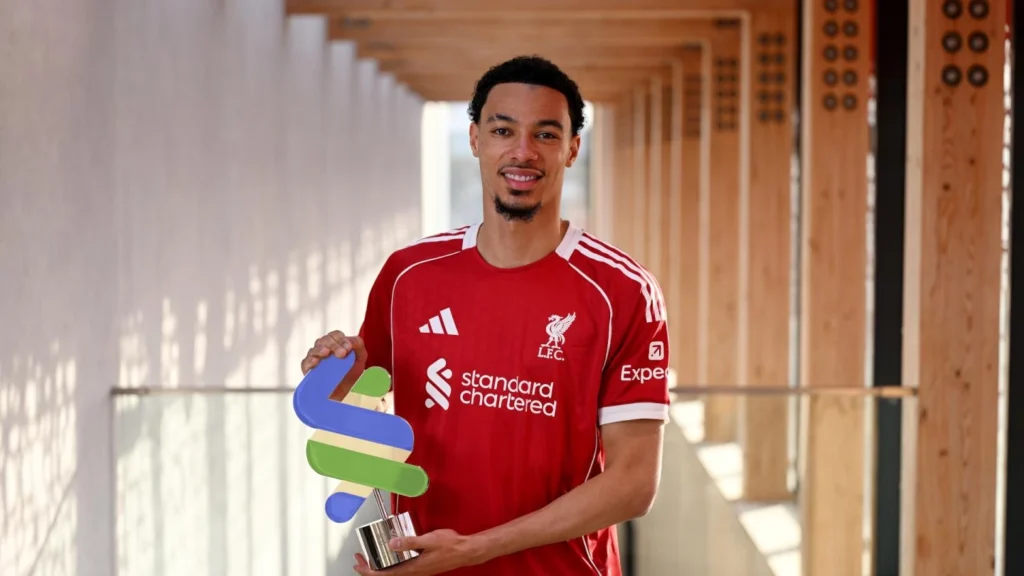
The timing of Ekitike’s injury made it all the more devastating because of the context surrounding it. He had signed from Eintracht Frankfurt for £79 million in the summer of 2025 as part of the most expensive attacking trio Liverpool had ever assembled alongside Alexander Isak and Florian Wirtz. The three of them had shared the pitch together for a total of just over 100 minutes across the entire season, a statistic that captures the sheer scale of Liverpool’s injury misfortune throughout the 2025-26 campaign. Isak missed three months with a broken leg. Wirtz battled a back injury and a stomach infection at critical moments. And now Ekitike’s season had ended in the cruelest fashion of all.
And yet, despite everything, Ekitike had delivered. He scored 17 goals in the Premier League, making him one of the ten highest scorers in the division in his debut season at a new club in a new country. He scored for France in their 2-1 friendly victory over Brazil in Massachusetts during the March international break. He was, before the injury, a certainty for Didier Deschamps’ World Cup squad. France head coach Deschamps was unequivocal in his assessment of what had been lost. “Hugo is one of the dozen young players who have made their debuts with the national team in recent months. He had perfectly integrated into the group, both on the pitch and off it. This injury is a huge blow for him, of course, but also for the France team. His disappointment is immense. Hugo will regain his top form. I am convinced of it.”
The GQ Interview: Grace Under Pressure
Which brings us to this week’s GQ Magazine interview, and to the words that have resonated so powerfully across the football world since their publication. Asked about the immense disappointment of missing the World Cup, a tournament he had been preparing for since France’s qualifying campaign, a tournament where he would have been one of Les Bleus’ most important attacking weapons, Ekitike’s response was a masterclass in maturity and perspective.
“Obviously I am in touch with them but not a lot because they are busy playing and I am busy with my recovery,” he said of his France teammates currently competing in North America. “I wish I was there, but that is life. I am where I am, and sometimes everybody has to deal with stuff. That is my challenge and I accepted it so I am happy for them and I hope they are going to reach the final, win it, and bring the cup back to France.”
Read that again slowly. This is a 23-year-old man, sitting in a rehabilitation facility, watching teammates play in the World Cup without him, nursing an injury that will keep him sidelined until at minimum January 2027. And his public response is to wish France well, to hope they win the tournament, and to describe his own suffering simply as “my challenge” that he has “accepted.” There is no bitterness, no self-pity, no rage at the injustice of circumstances. Just grace, clarity, and an emotional intelligence that goes far beyond his years.
The Road Ahead
The medical reality of an Achilles rupture is sobering. While most athletes can return to running within six months of surgery, the Achilles presents a unique challenge because of what it demands in terms of explosive propulsion, the exact quality that makes Ekitike such a devastating centre-forward. Medical experts consulted by This Is Anfield noted that it typically takes a full twelve months for a player to fully trust their repaired Achilles in the explosive one-versus-one situations that define elite attacking play. The earliest realistic return date for Ekitike is January 2027. The most cautious estimate points to April 2027.
For new Liverpool head coach Andoni Iraola, whose arrival at Anfield this summer heralded a new chapter for the club, Ekitike’s timeline represents one of the most significant pieces of the squad-building puzzle he must solve. The Spaniard will need a reliable centre-forward option for the opening months of the 2026-27 season, with Alexander Isak himself still working his way back to full sharpness after his own injury-interrupted debut campaign. The summer transfer window, already busy with the arrival of Jeremy Jacquet from Rennes, may yet produce further activity in the forward areas as a direct consequence of Ekitike’s absence.
But for Ekitike himself, none of that external planning and speculation appears to be occupying his mind. He is focused entirely on his recovery, on the daily discipline of rehabilitation, on the patient, unglamorous work that transforms serious injuries into distant memories. His philosophy is simple and it is powerful. He has a challenge. He has accepted it. He is getting on with it.
When Hugo Ekitike runs out at Anfield next season, the reception he receives will be enormous. He has already won the respect and affection of Liverpool supporters through his goals and his energy. He is now winning something harder to earn and more lasting in its effect: their admiration for who he is as a human being. That, in the end, is what separates good players from great ones.
🔴Find the Latest News on Player Ratings | Transfers | Prematch | Postmatch
Thank you for your continued support, and let’s cheer Liverpool on to success in the upcoming match. Your thoughts are always welcome in the comments section. For further insights, you may explore the official Liverpool FC website by clicking here.
YNWA (You’ll Never Walk Alone)!
The Liverpool FC Times Team
LiverpoolFCTimes.com